
Glacière de MonlésiGlacière de Monlési is an ice cave near Couvet in Val de Travers, Switzerland. In winter cold air enters the cave from a high-lying entrance and remains trapped there during summer. It contains a considerable amount of ice througout the year despite outside avarage annual air temperatures of around 5 degress Centigrade. | |||
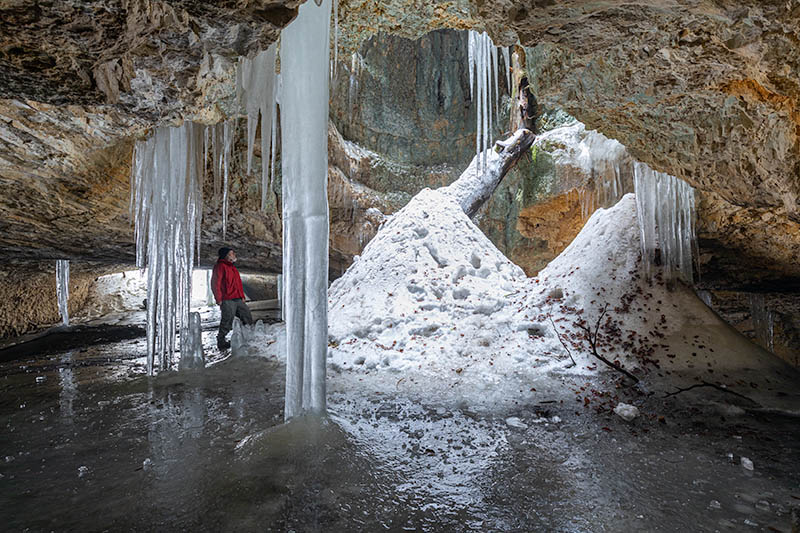 Ice formation in the deepest part of the cave. | 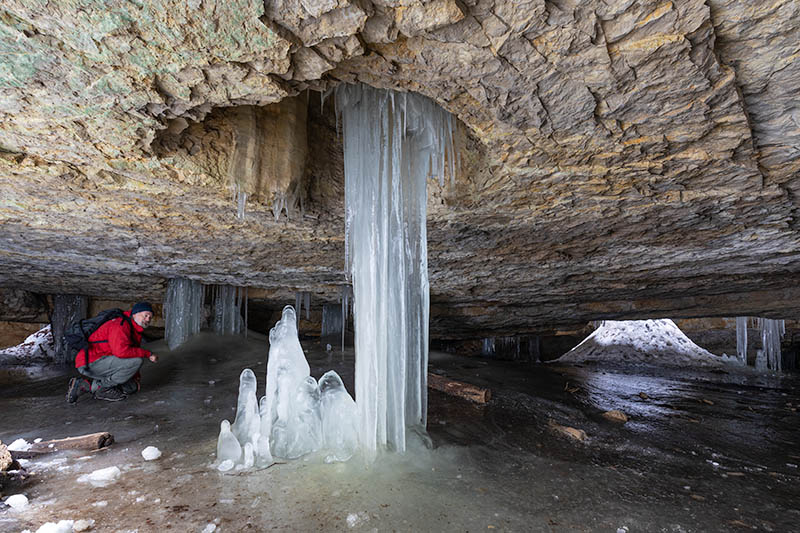 Water entering the cave from above has frozen. | 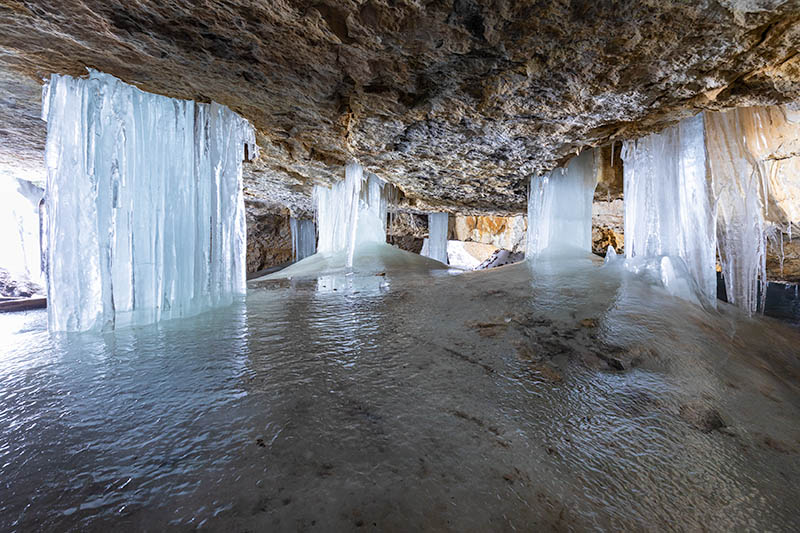 Ice columns in the central part of the cave. | 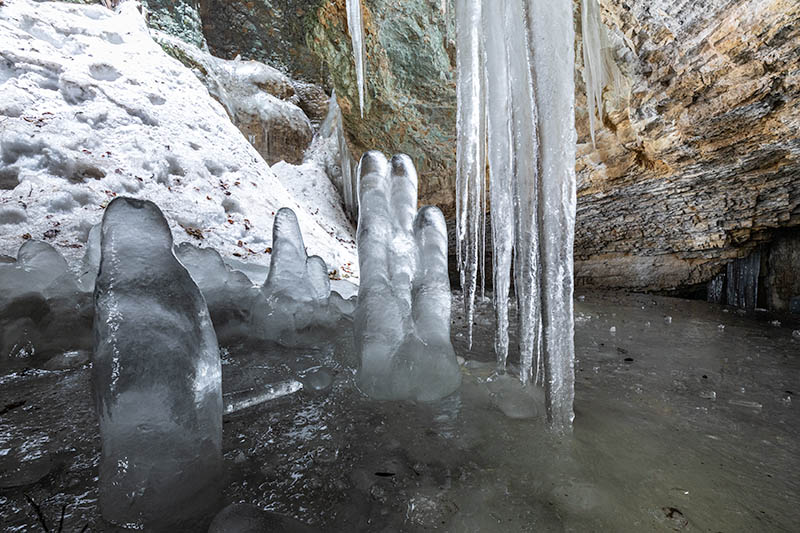 Ice stalagmites near the cave entrance. |
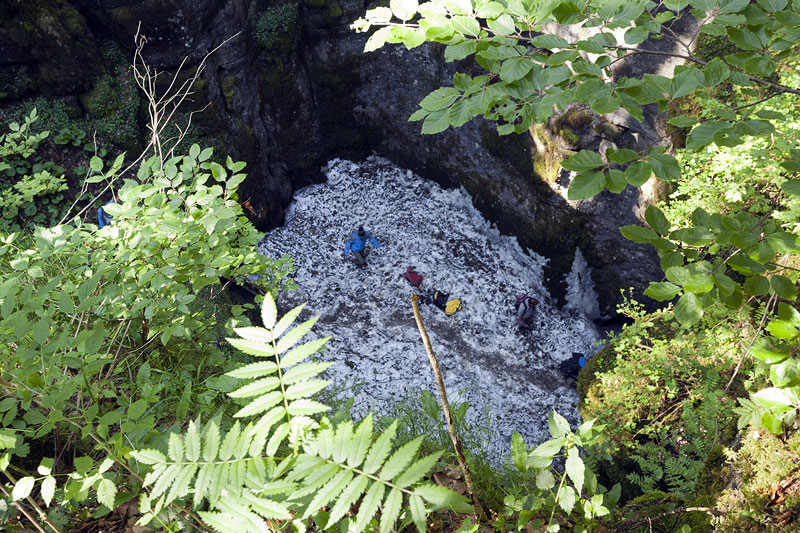 The largest access pit is somewhat hidden between trees and bushes. | 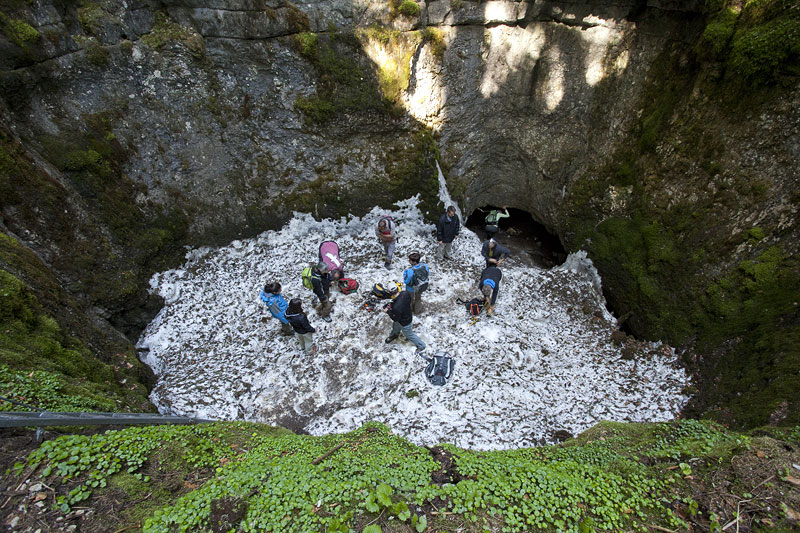 Th ecave can be reached via a steep path and a ladder. | 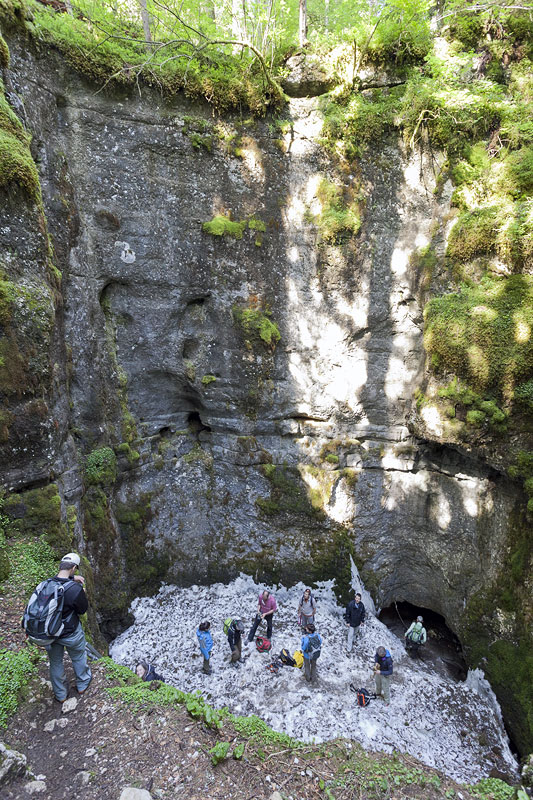 At the bottom of the pit a lot of snow remains in July. | 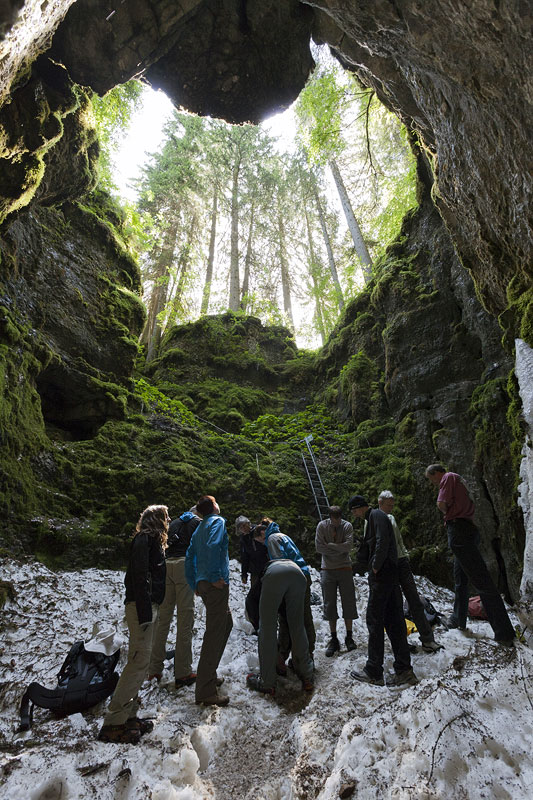 On this hot summer day temperatures at the bottom of the pit are near freezing. |
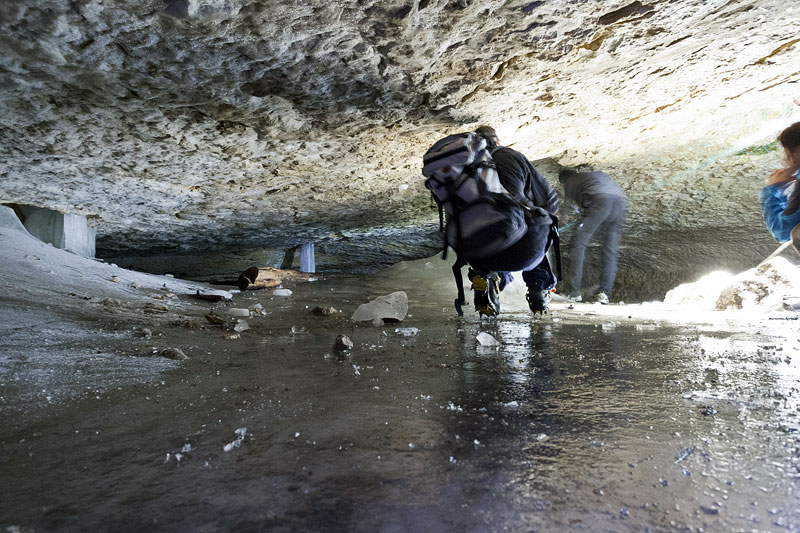 Near the entrance there is little room between the main ice body and the cave's ceiling. | 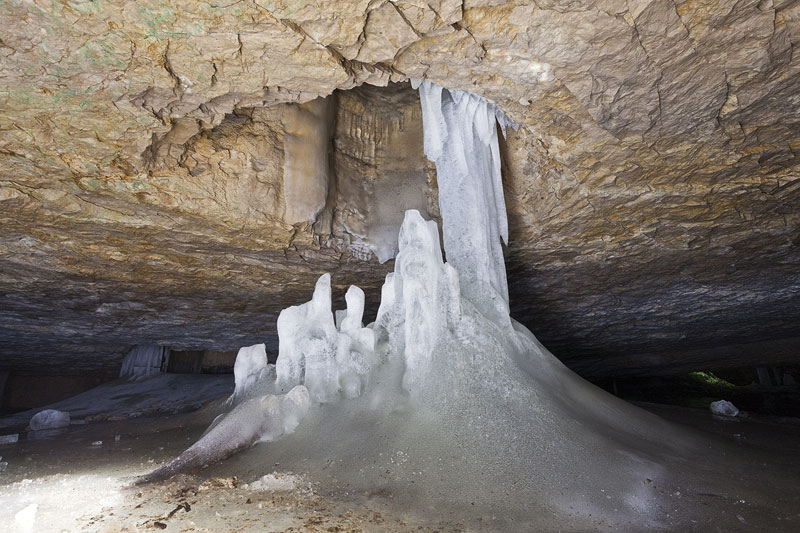 Water entering the cave from above freezes and forms ice stalactites and stalagmites. | 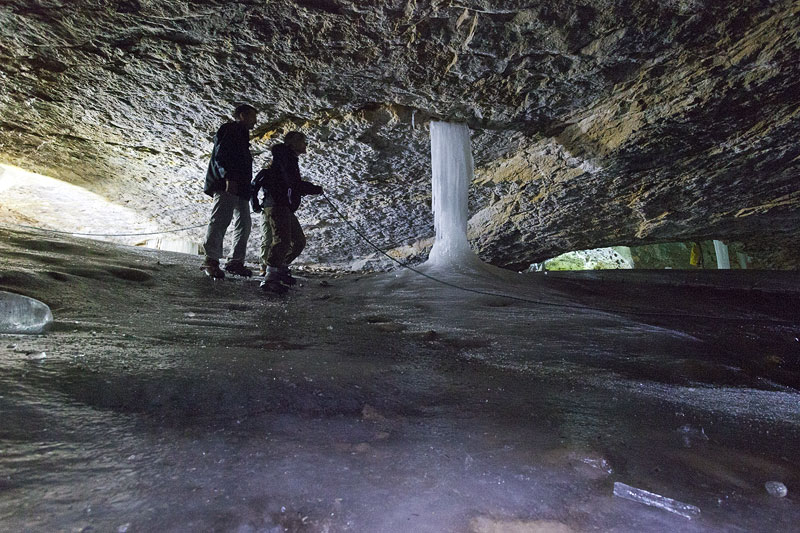 Between two cave openings. Note rock debris from the ceiling frozen into the ice. | 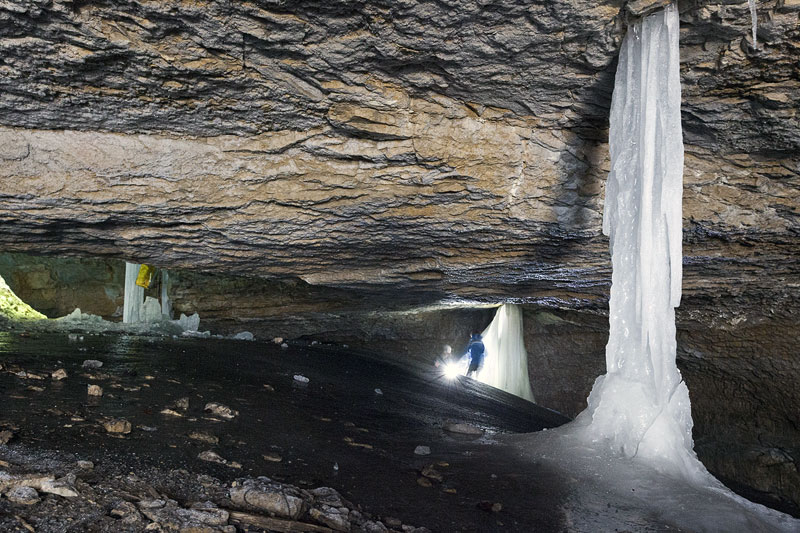 Flow of the big ice body has caused fracturing of the stalagmite (lower right). |
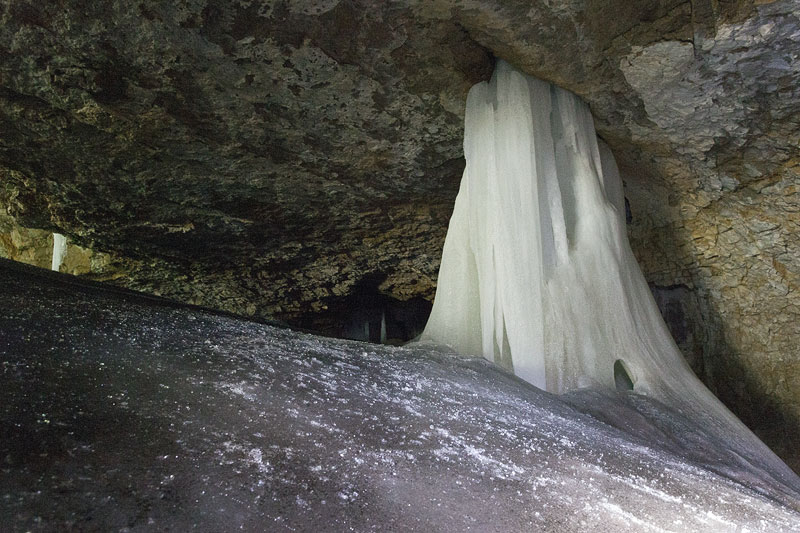 Ice acculumation is by freezing water entering the cave. Cold air which enters the cave in winter remains trapped here in summer. | 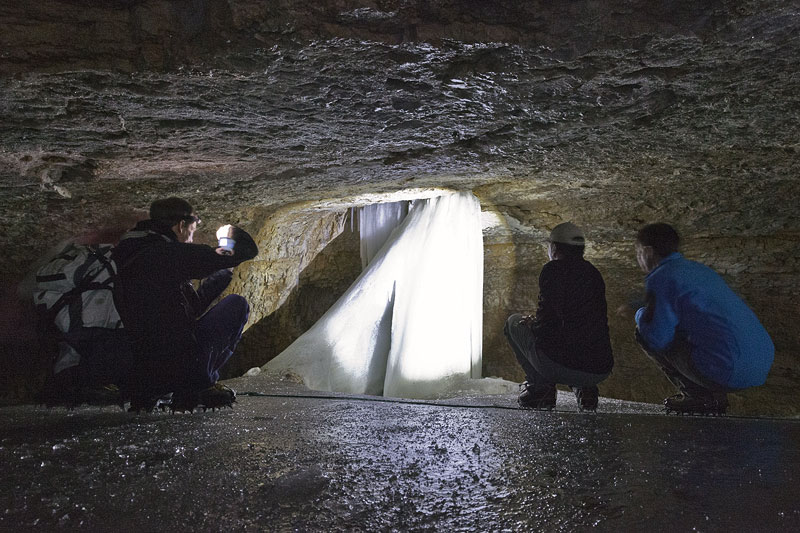 There is some heat flow from surrounding rock to the ice; the main ice body slowly melts from below and subsides forming a cavity above. | 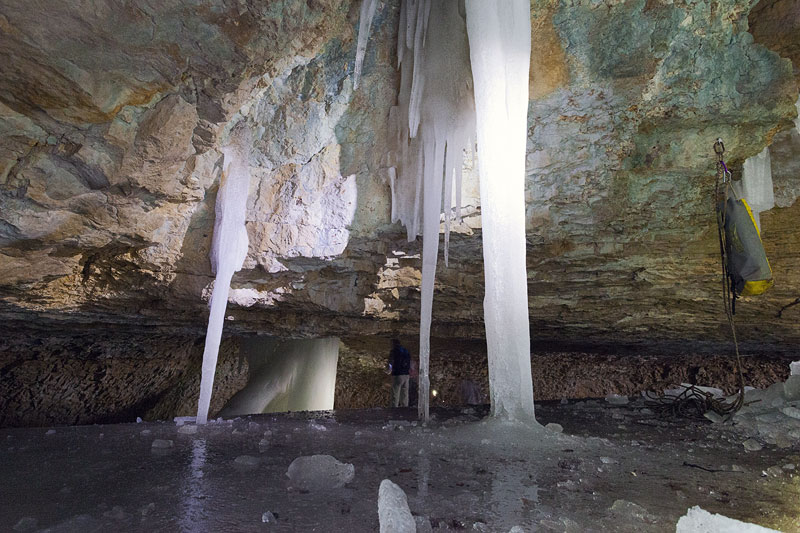 Near the cave openings some daylight illuminates the ice formations. Note colourful biogenic and mineral deposits on the cave's ceiling. | 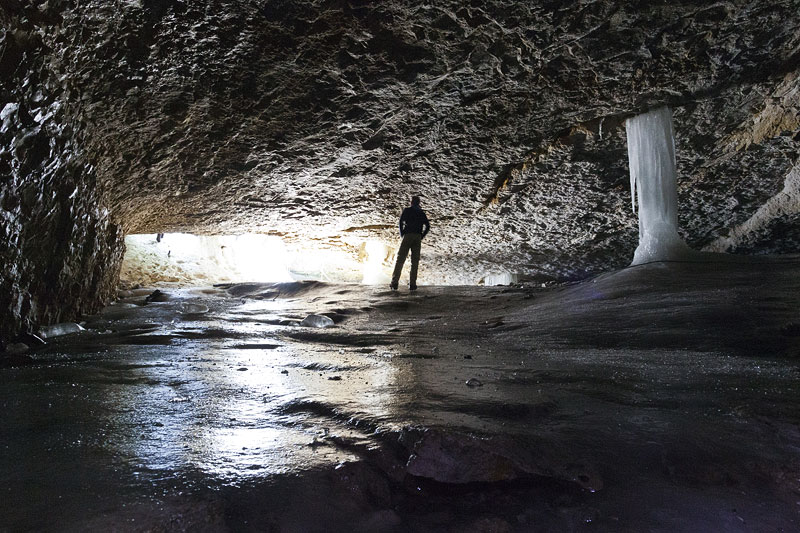 Melting of ice consumes latent heat, which cools the air above the ice. This maintains air temperatures near zero degrees centigrade withing the cave all through summer.
|
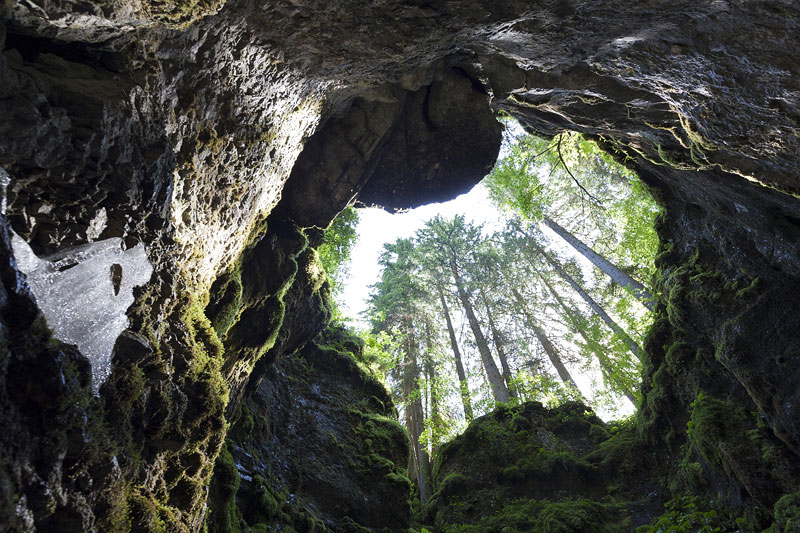 When one climbs out of the pit the air gets warmer very quickly! The effect is quite spectacular indeed. | 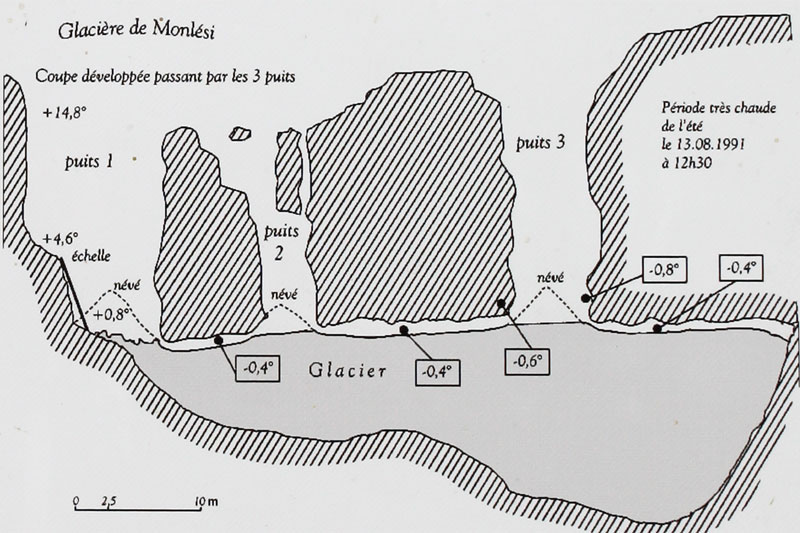 Cross section of the cave system in summer. Contrary to what the drawing shows, the ice is up to 30m thick (explanatory display near the cave). | 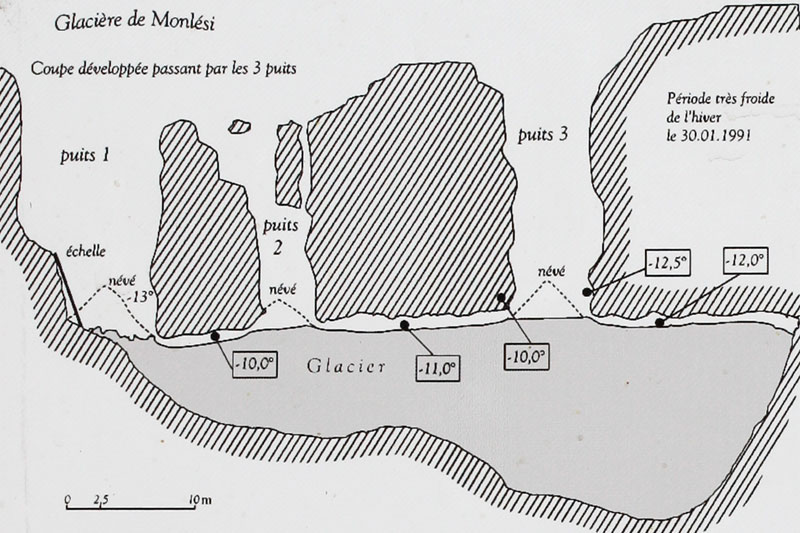 Cross section in winter. The ice mass is not a glacier in the strict sense as it is not formed by snow accumulation and has a surface are of less then 10'000 square metres. | 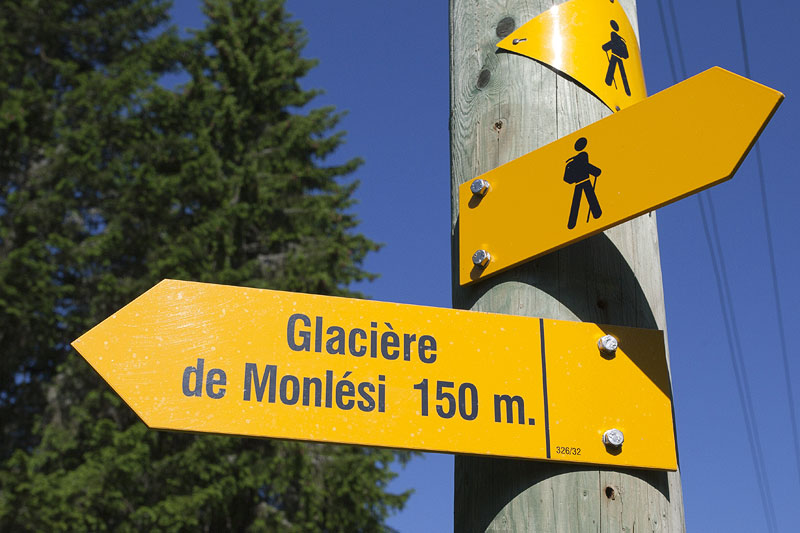 Along the path to the cave. The entrance is at about 1100 m.a.s.l. |
| Photos: Jürg Alean, June 16th, 2012 | |||