Lava Flows in Pico and Sao Jorge (September 2009)On Pico Volcano four historical eruptions were recorded : Prainha (1562-64) from the rift ESE of Pico Volcano, and three fissure eruptions on the volcano's flanks: Santa Luzia (1718), Sao Joao (1718) and Silveira (1720). The first two produced vary large volumes of lava with flows about 10km long; the latter two were much smaller, with flows about 2km long and mean effusion rates of 0.5-1 cubic meters per second. A more recent fissure eruption occurred in 1808 on Sao Jorge Island. Note that historical lava flows are called «misterios» by locals. | |||
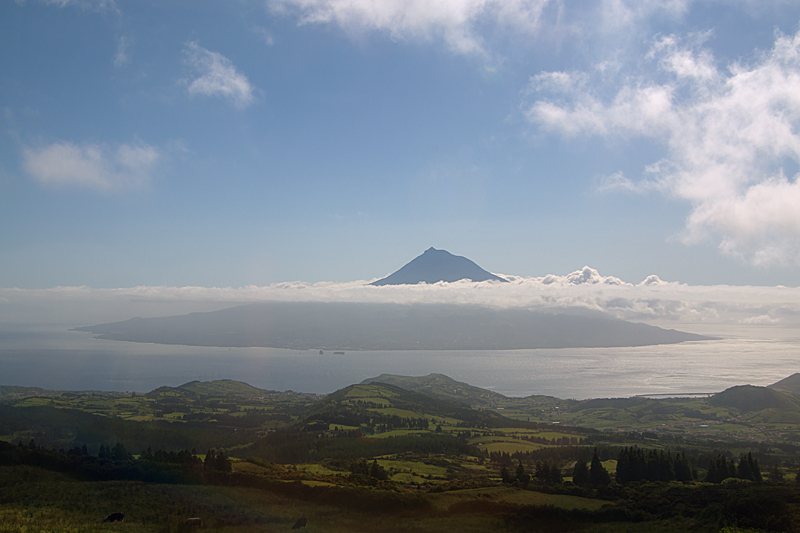 Pico Volcano's summit (2351m.a.s.l.) rises above the inversion layer (view from Faial's Caldera). | 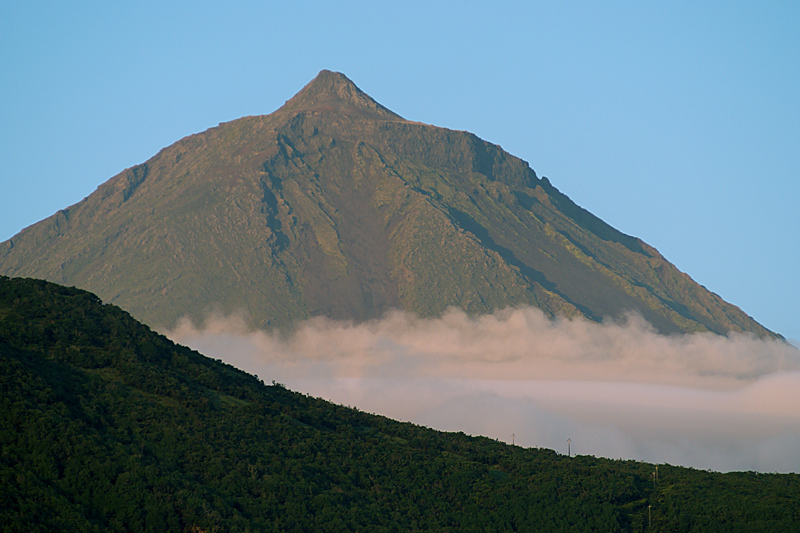 The 100m tall cinder cone Piquinho stands within the summit crater of Pico (view from Sao Roque). | 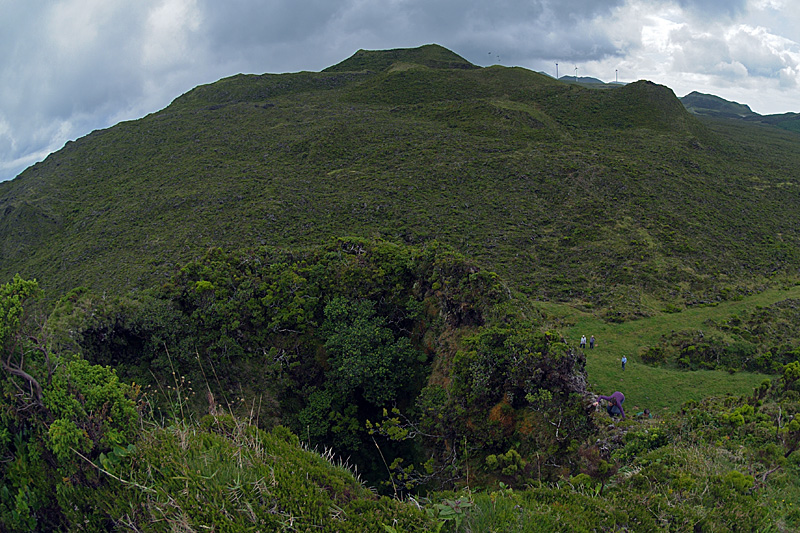 Cabecos do Misterio, steep spatter cones of the 1562-64 eruption on Pico Island. | 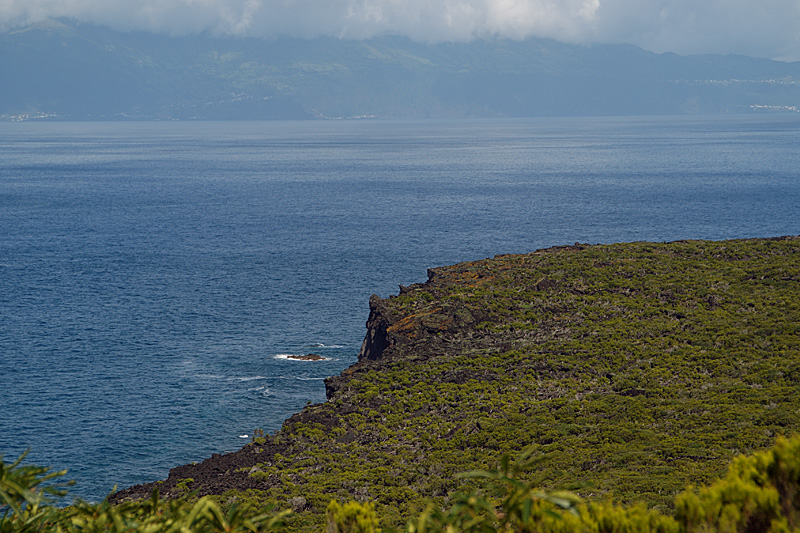 Ponta do Misterio, the lava delta of the 1562-64 lava flows. Sao Jorge Island is in the background. |
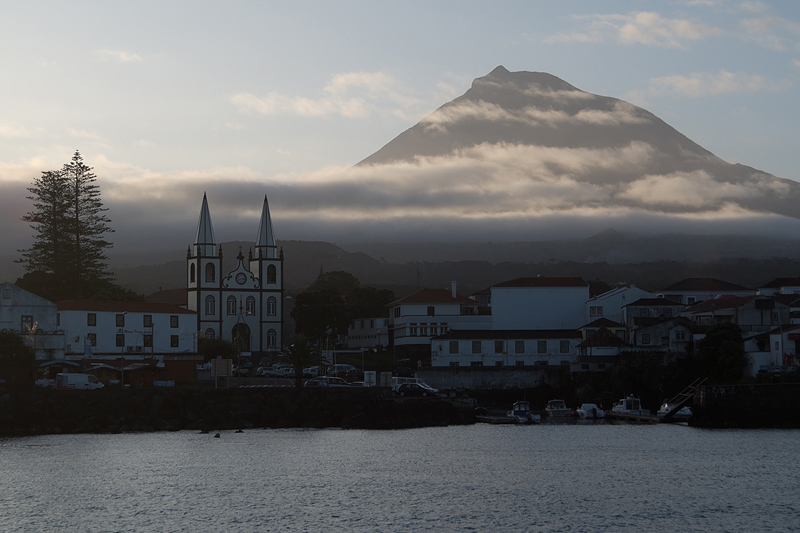 Pico Volcano rises from the morning fog (view from Madalena harbour, the NW tip of Pico). | 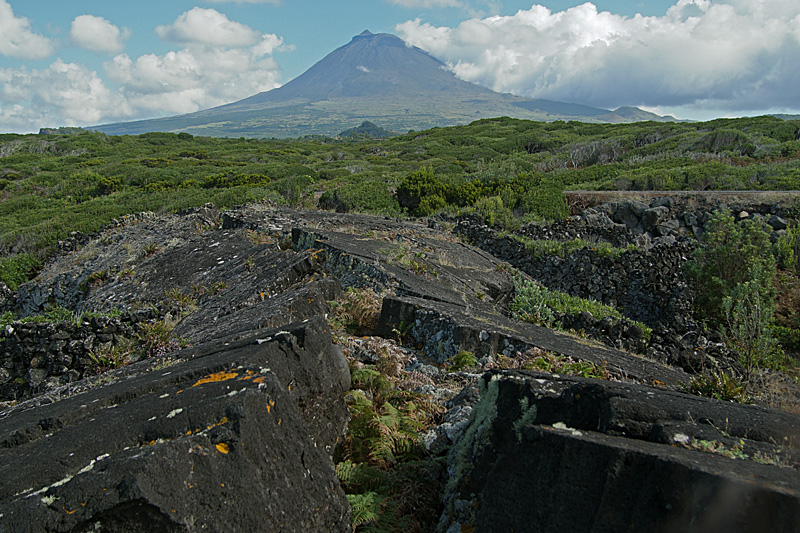 A spectacular pressure ridge was pushed upwards by lava flows increasing below the solidified crust. | 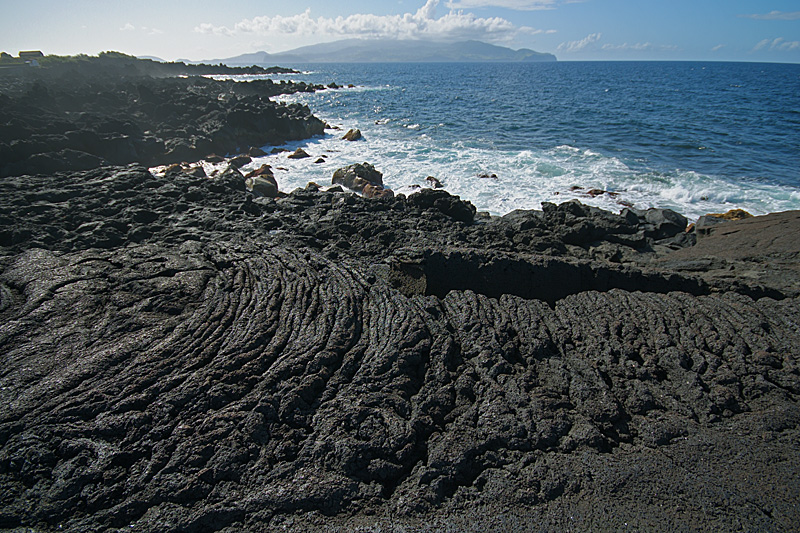 Ropy lavas on the side of the pressure ridge. Faial Island in the background. | 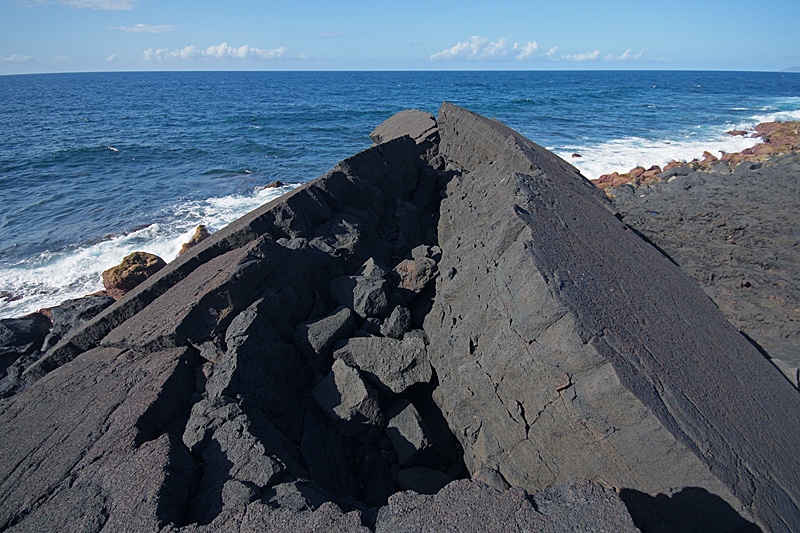 The pressure ridge reaches the sea. These flows were erupted about 500-1000 years ago. |
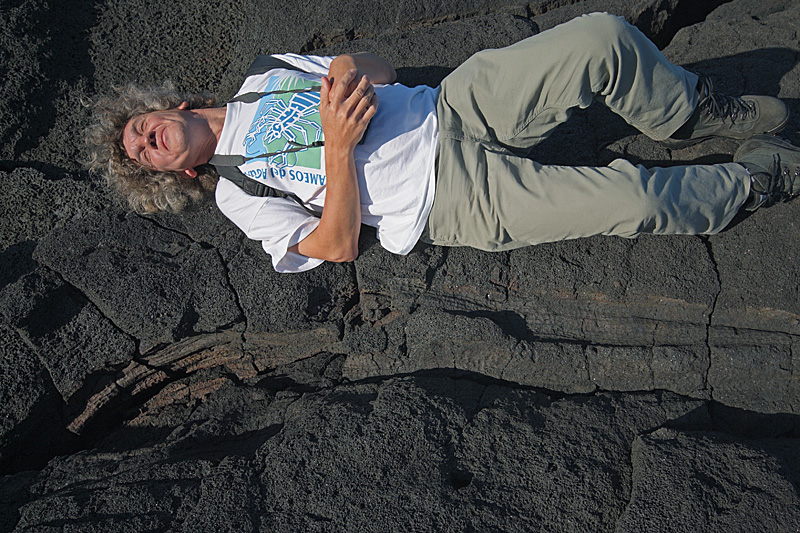
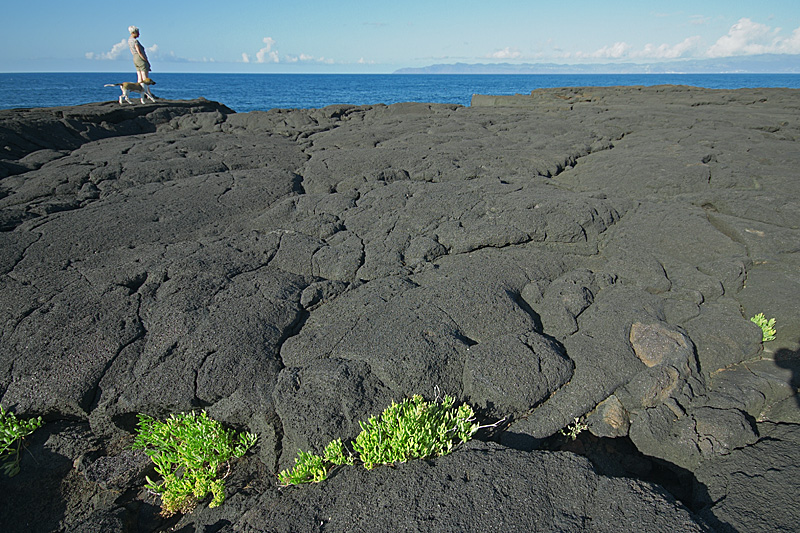 Plants start to colonize pahoehoe lava flows a few centuries old. Sao Jorge Island in the background. | 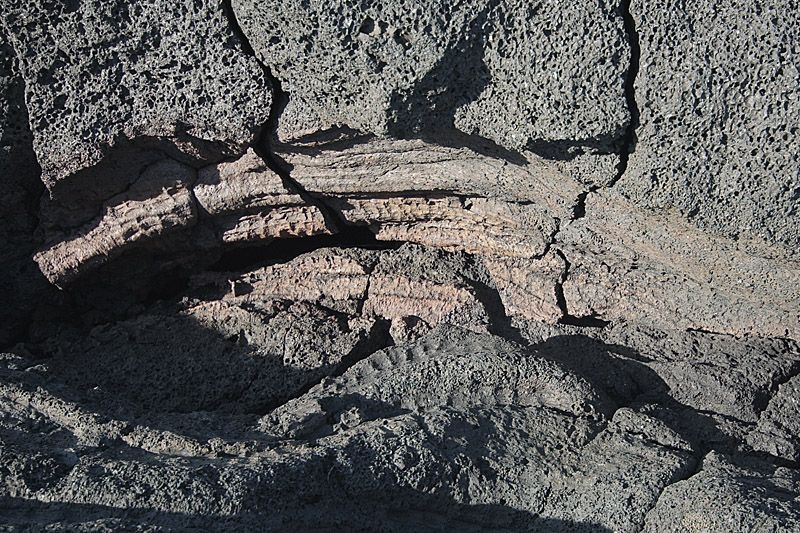 Casts of trees which were enclosed by the lava flow and then carbonized. Roby gives the scale here. | 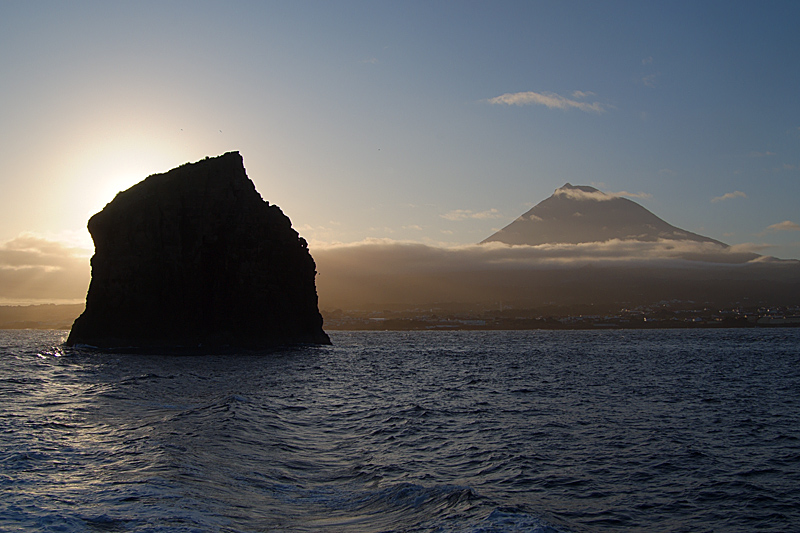 Em Pè tuff cone, a Surtsey-like cone deeply eroded by wave action. Pico is in the background. | 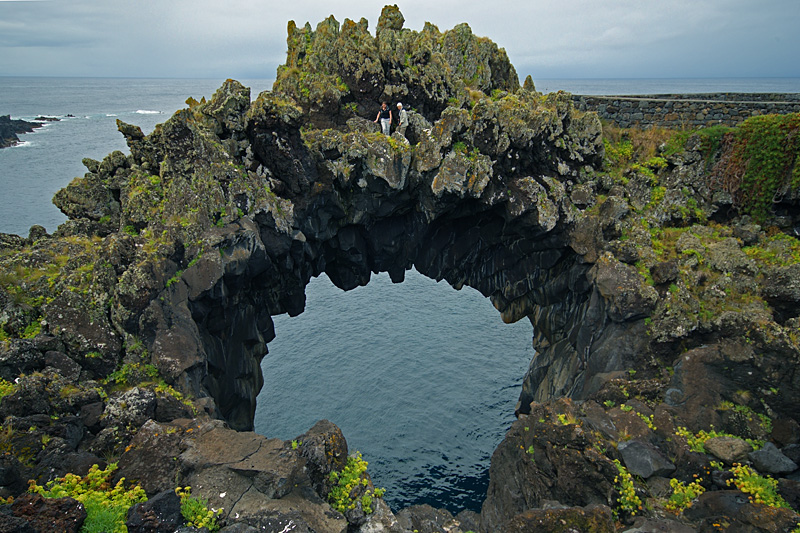 A skylight in front of the lava flow's entrance into the sea has resulted in this spectacular natural arch on Sao Jorge Island. |
| Photos by Marco Fulle taken with 10-20mm, 24-85mm and 80-200mm lenses (reflex digicam with 16x24mm sensor). | |||