
Tectonics and subduction of the lava lake's crust in 2008 | |||
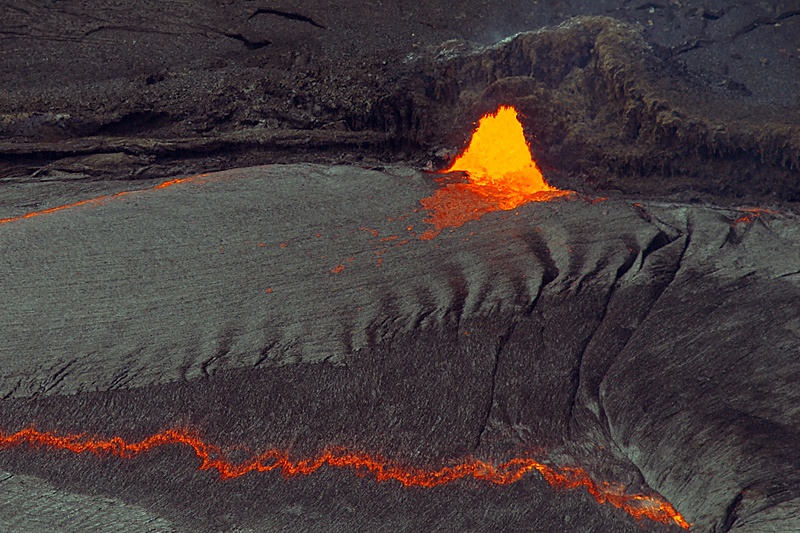 Most spattering activity takes place at a hornito on the southwestern shoreline (top right). | 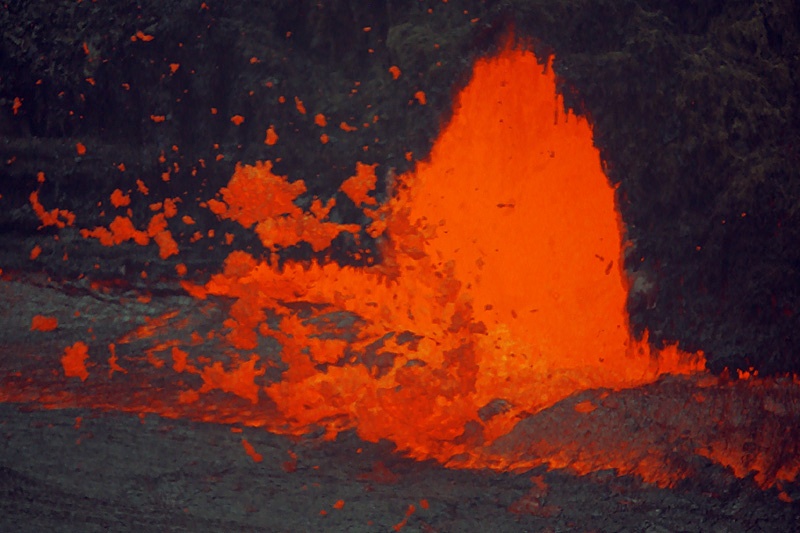 Degassing is mainly taking place from the hornito's vent and causes mild lava spattering. | 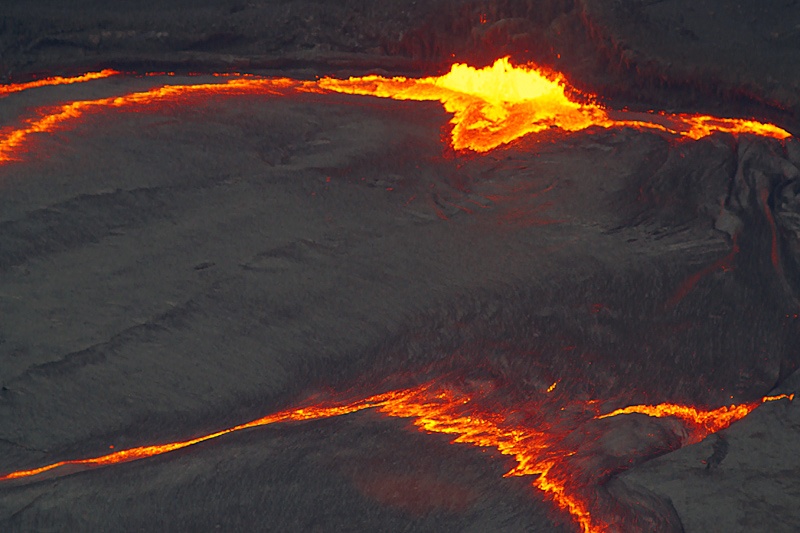 Sometimes waves from the lake up to one metre high erode and enlarge the lips of the hornito's vent. | 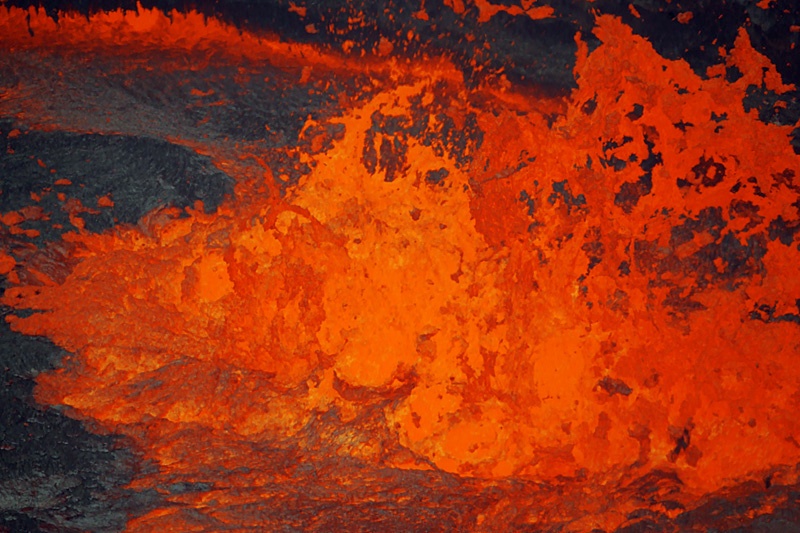 Big waves from bubble eruptions lead to the formation of lava stalactites at the hornito's lips (top left). |
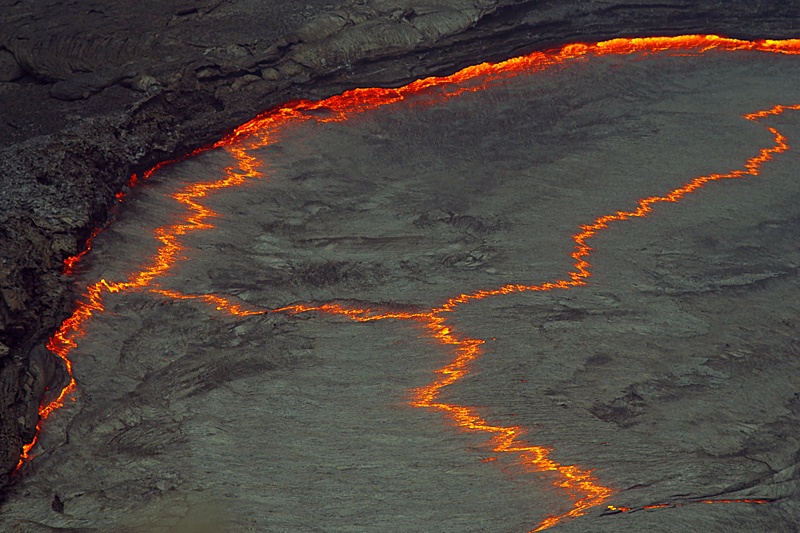 Lava upwelling takes place mostly along the southeastern shoreline, far away from the hornito. | 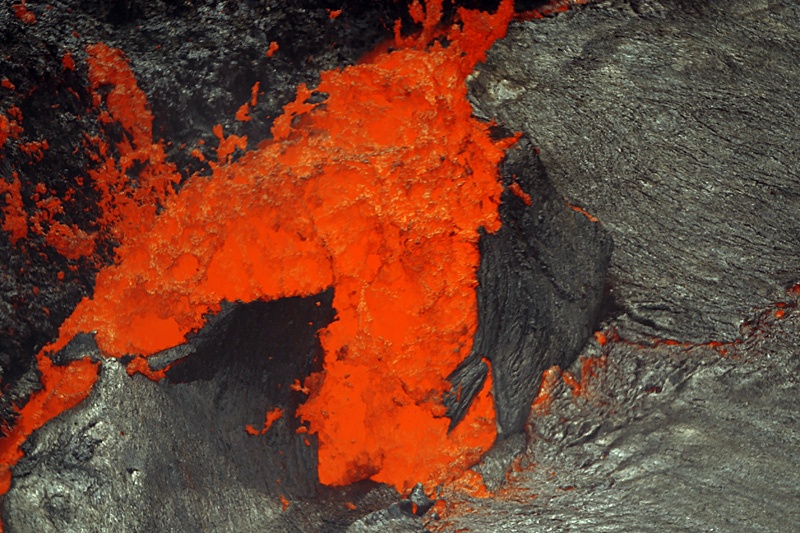 Upwelling sometimes causes brief and violent bursts which lift the shiny lava crust on the lake's surface. | 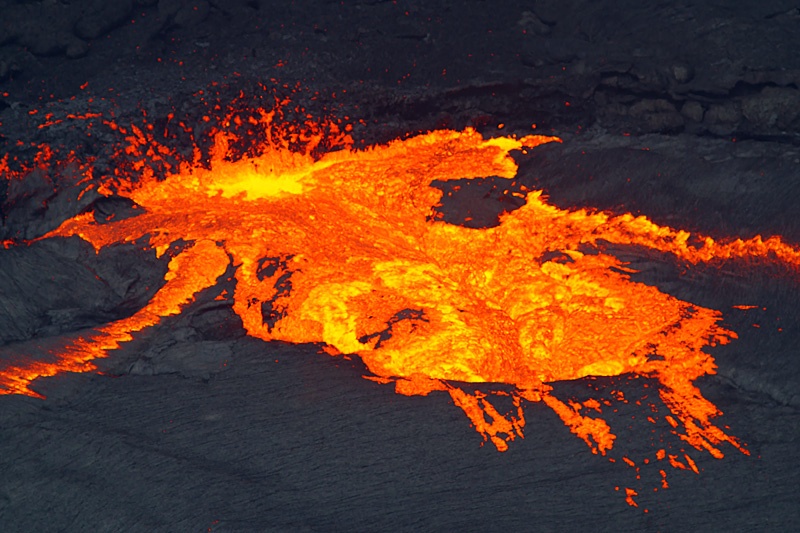 After the bursts fresh yellow lava splashes over the colder, and therefore darker, lava crust. | 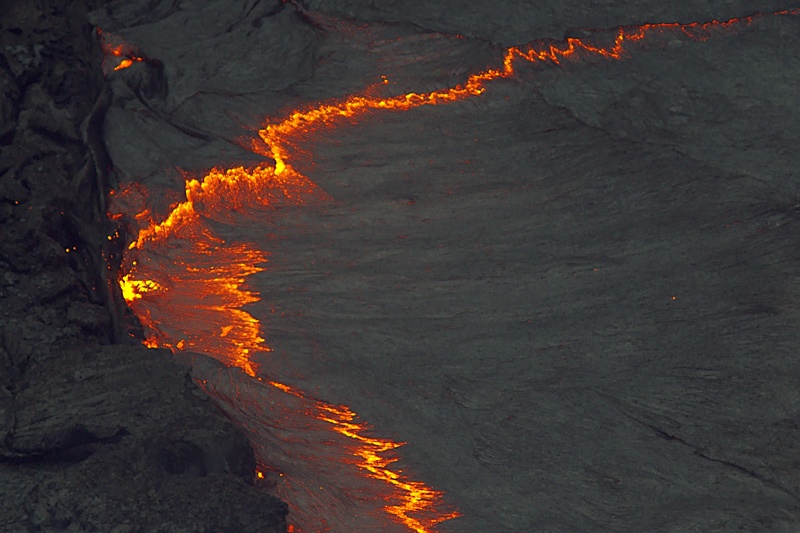 Such bursts agitate the lake's surface causing waves and cracking up the crust on the eastern shoreline. |
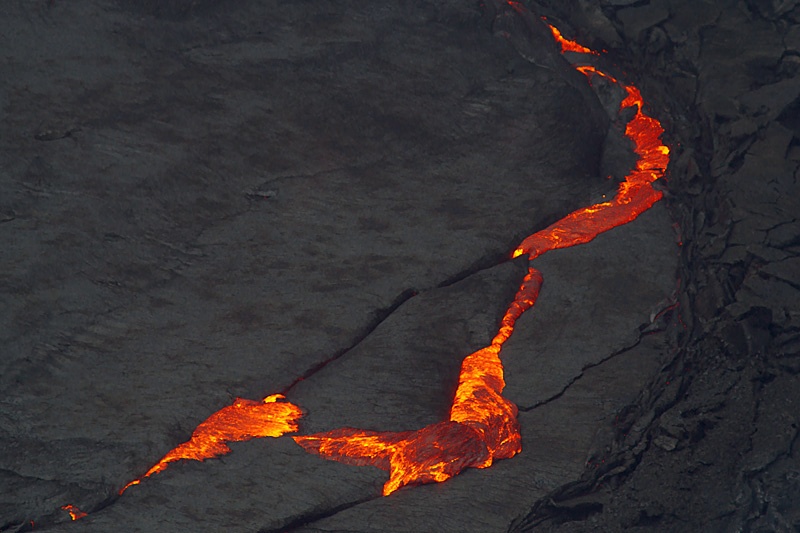 At the NW shore lava is subducted into the depths of the lake, while some incandescent lava gets squeezed out through fissures. | 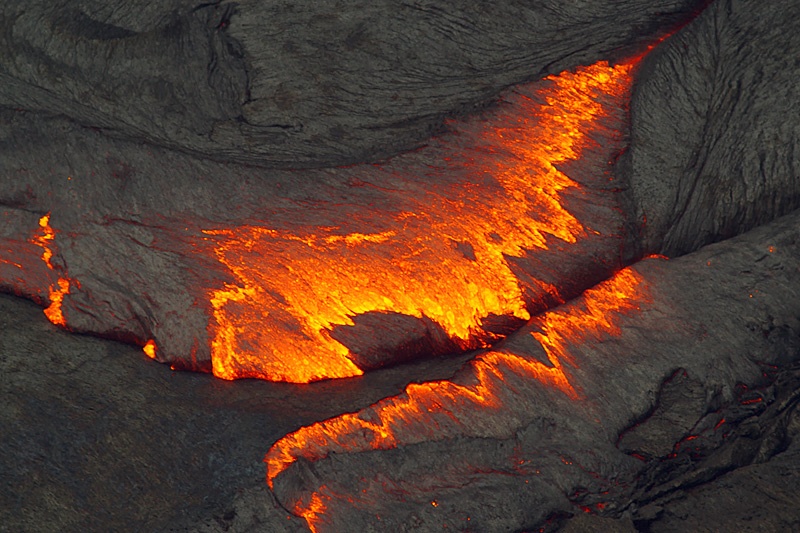 Tension induced into the crust by the subduction process often extends the skin so much that red lava appears from below. | 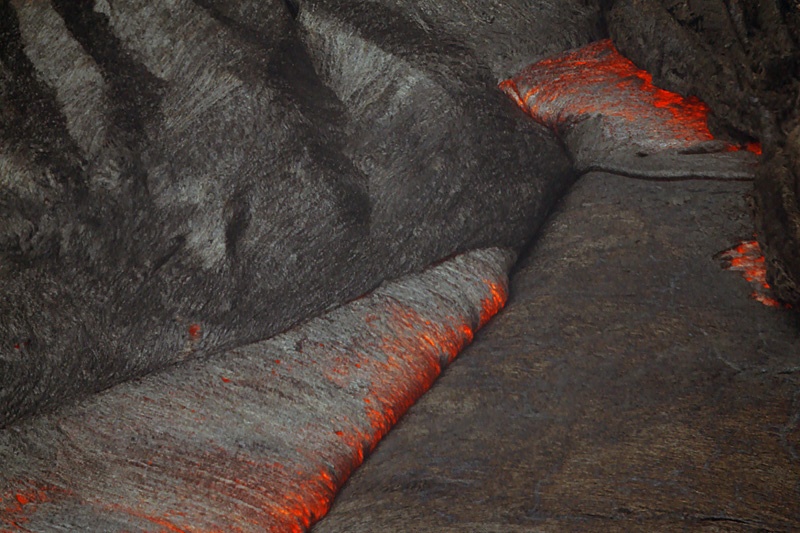 Sometimes a crustal plate is thrusted above another one, and incandescent lava is exposed along the wavefront. | 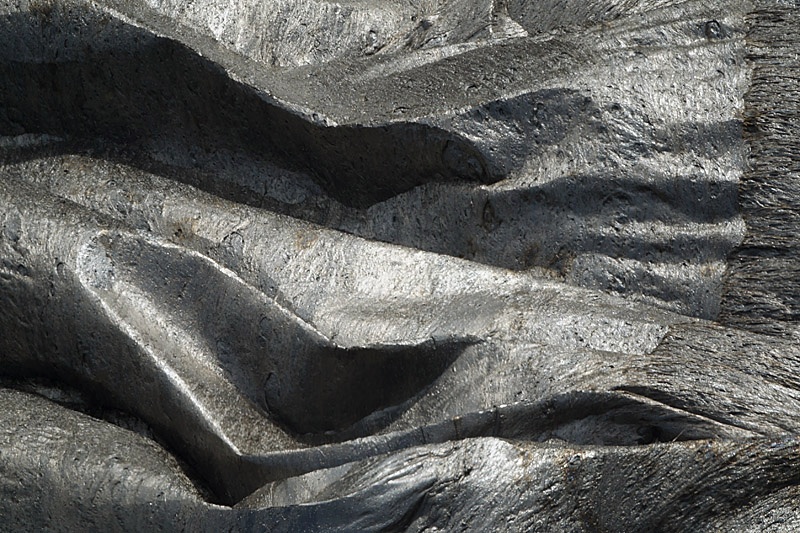 Occasionally the crust becomes so thick that it does not get subducted and accumulates on the western shoreline forming shiny folds. |
| Photos by Marco Fulle, taken from a distance of 70 meters with 135mm and 500mm lenses and digital single lens reflex camera (equivalent focal lenghts of 200mm and 750mm on 24x36 film). | |||