
PasterzeUnless otherwise noted all photos were taken on 6th and 7th August 2009. | |||
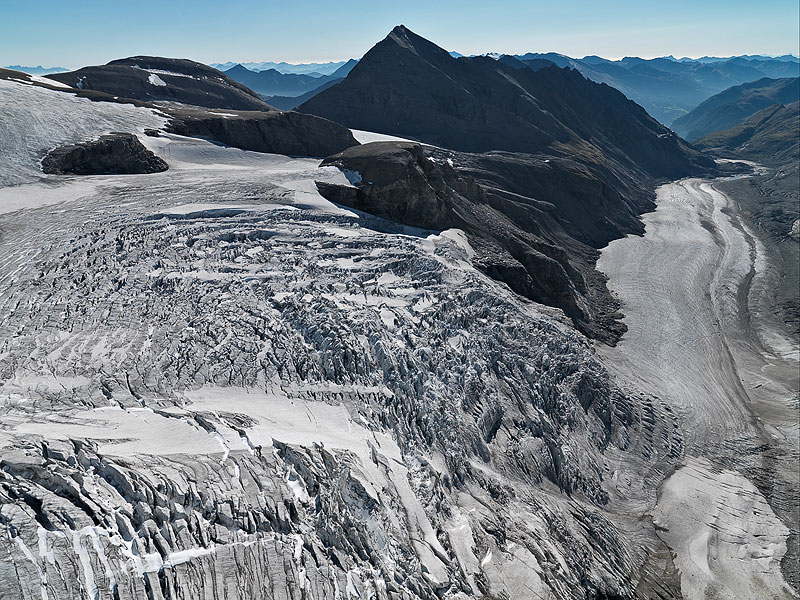 Looking over the great icefall towards the tongue; aerial photo 30. August 2008; Bernhard Edmayer. | 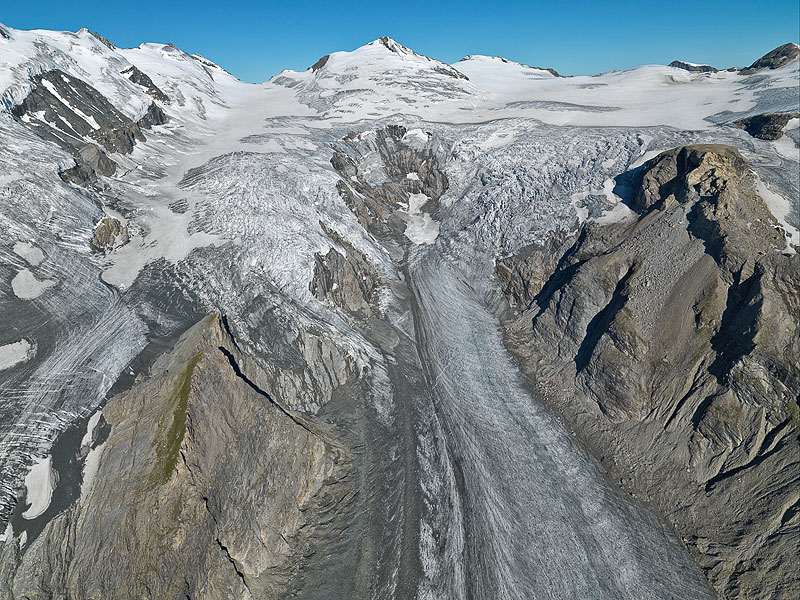 Looking over the lower glacier tongue towards the icefall and the accumulation area beyond; aerial photo 30. August 2008; Bernhard Edmayer. | 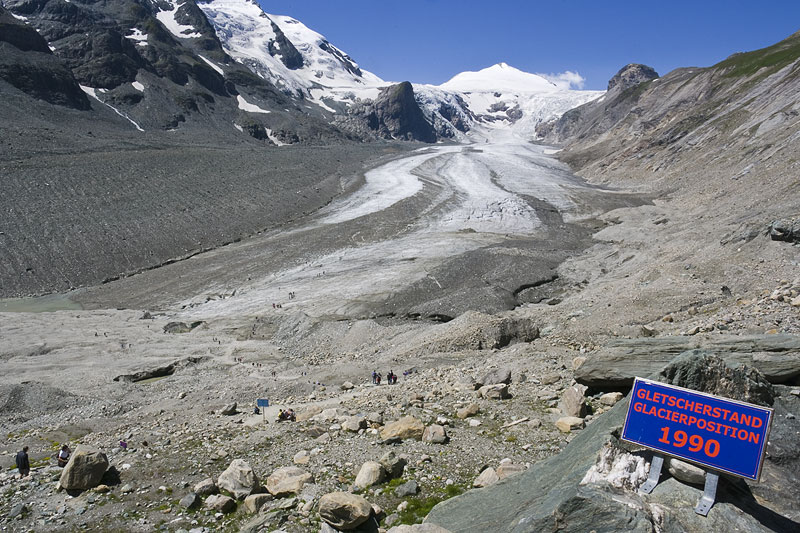 Massive recession is evident from this view taken in 2009. Debris cover reduces ablation on the true right side of the tongue (left in the photo). | 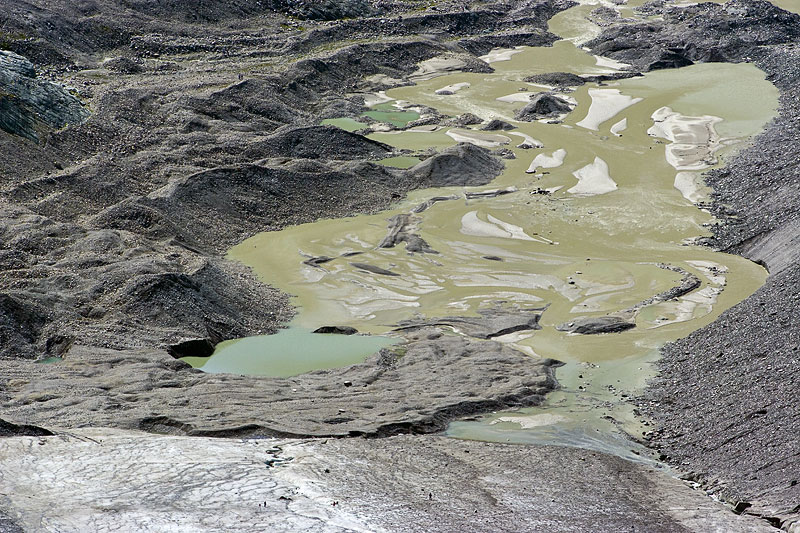 Complex terrain in the glacier forefield. Note various moraine ridges, kettle holes and shifting sand bars. People on the glacier (below) give the scale. |
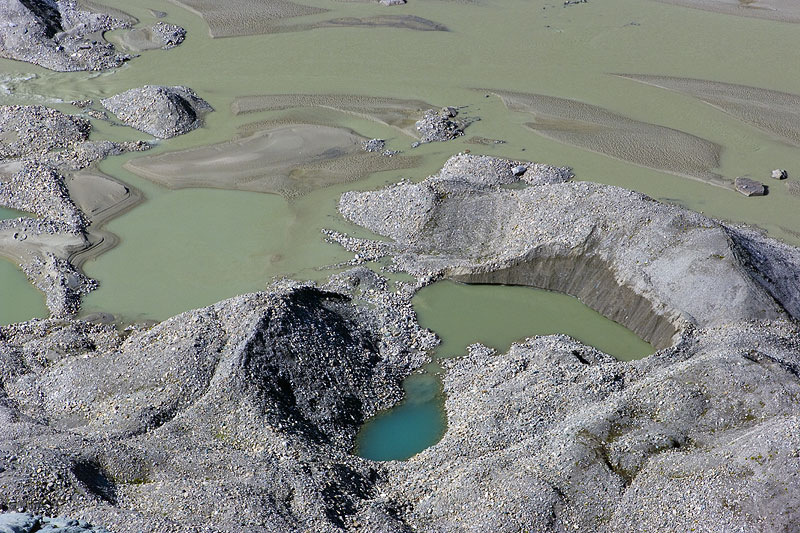 Kettle holes in the glacier forefield. | 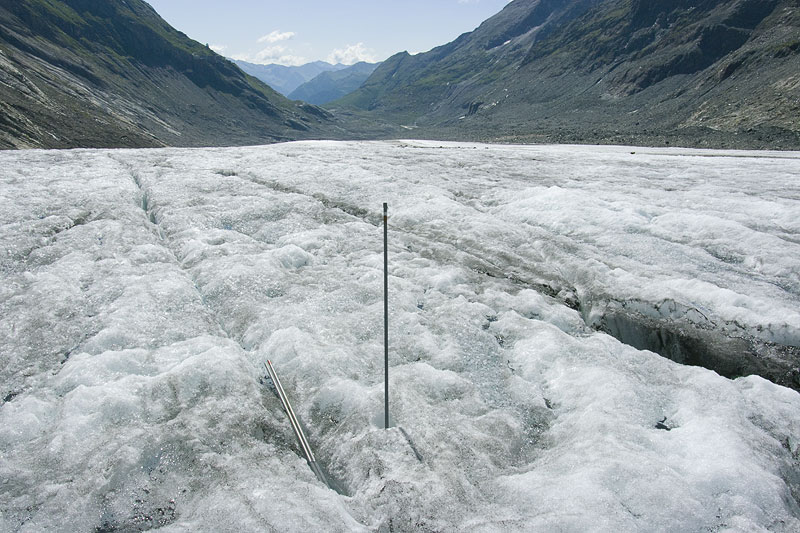 Ablation stake on the glacier tongue. | 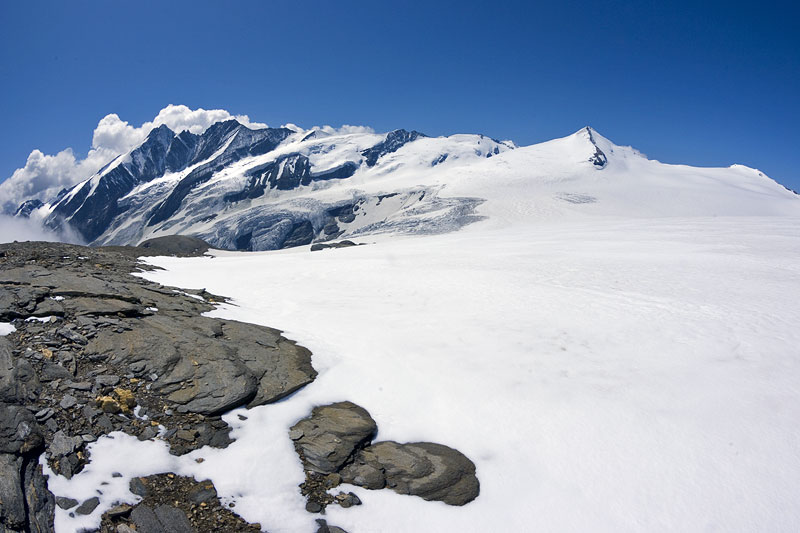 View cross the accumulation area from a point 3062 m.a.s.l. north of Oberwalder Hütte. | 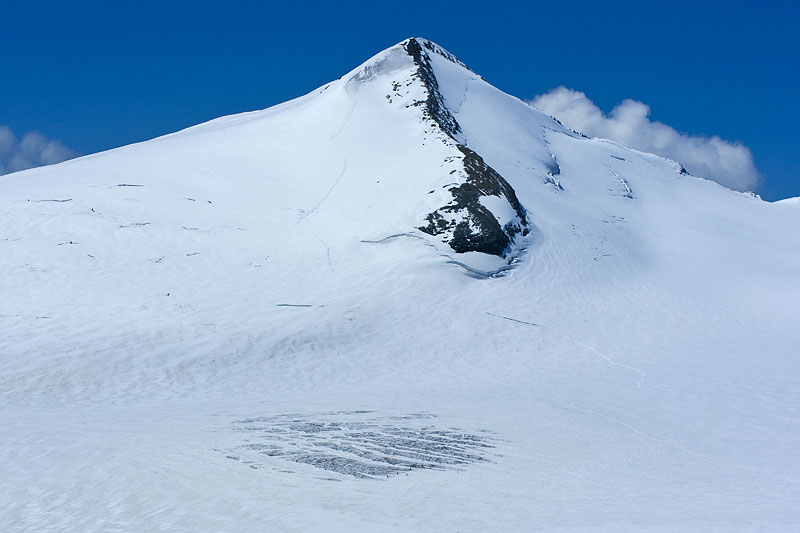 Johannis Berg (3453m), in the accumulation area of Pasterze, seen from the East. |
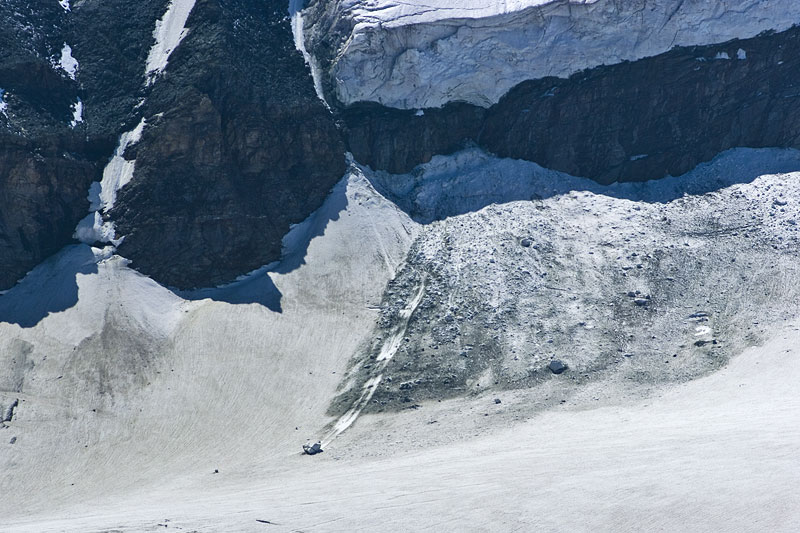 A large ice block and its track below an ice cliff in the accumulation area of Pasterze. | 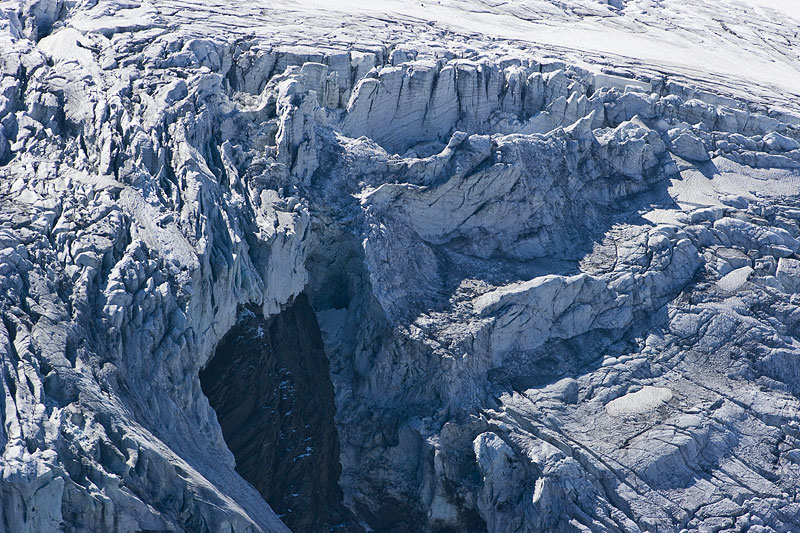 Firn stratification and crevasses in the southern part of the great icefall. | 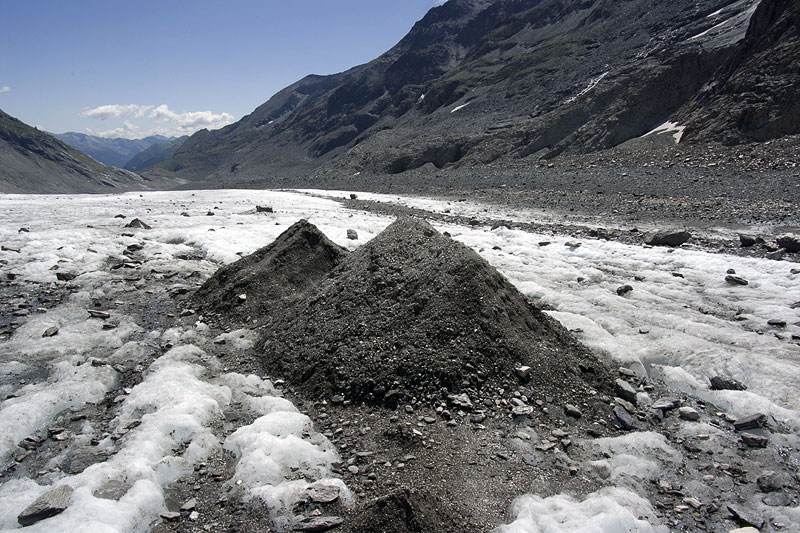 Dirt cones on the tongue of Pasterze. | 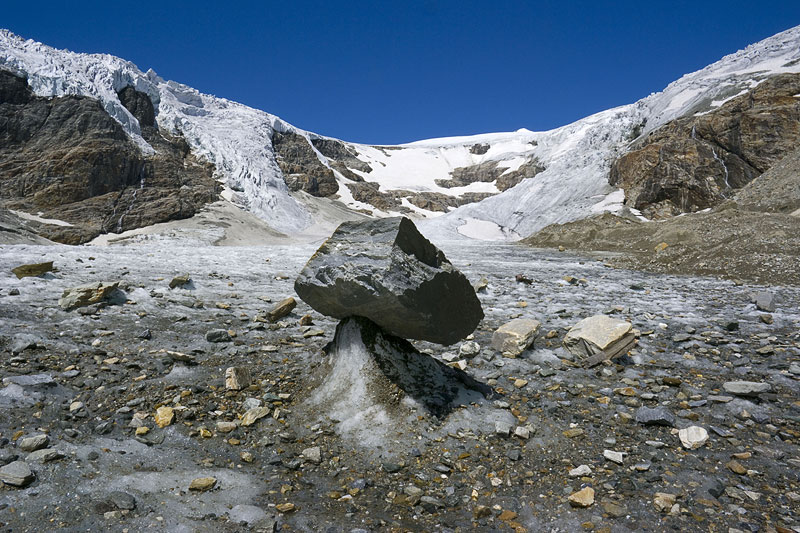 Glacier table on the upper part of the glacier tongue. |
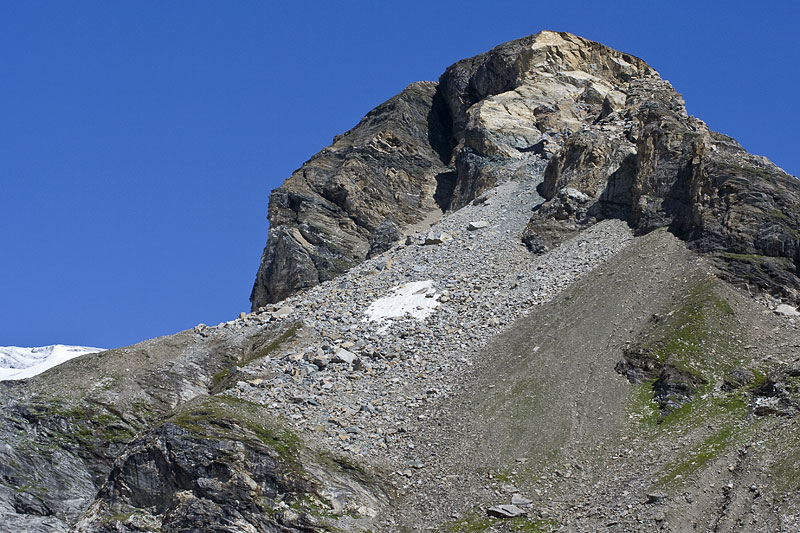 Landslide of 2007 from Mittlerer Burgstall. | 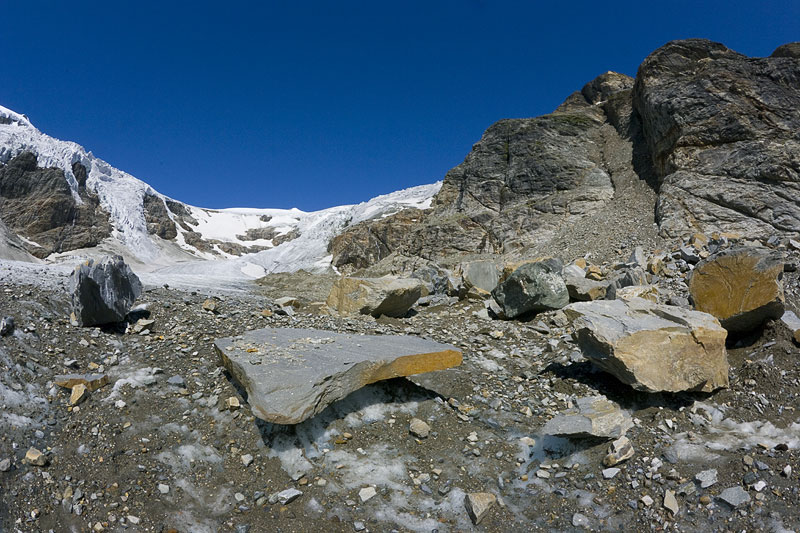 Debris of the 2007 landslide on the glacier tongue. | 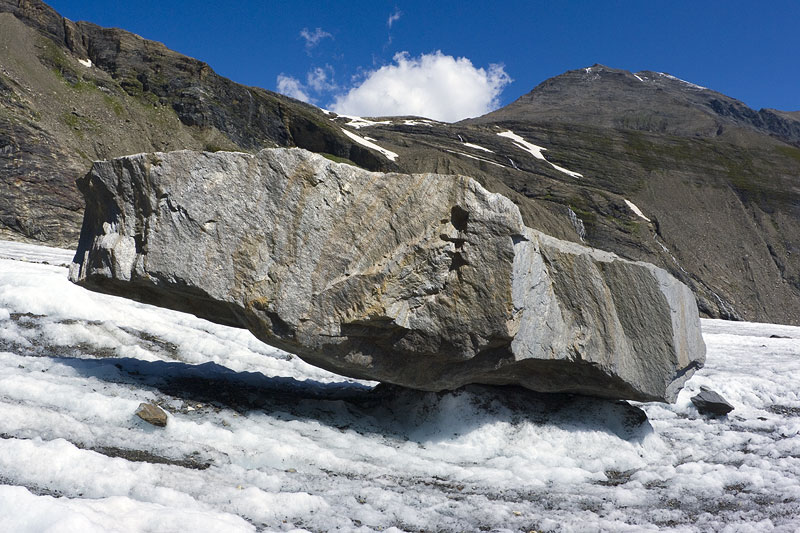 Massive glacier table on the glacier tongue. | 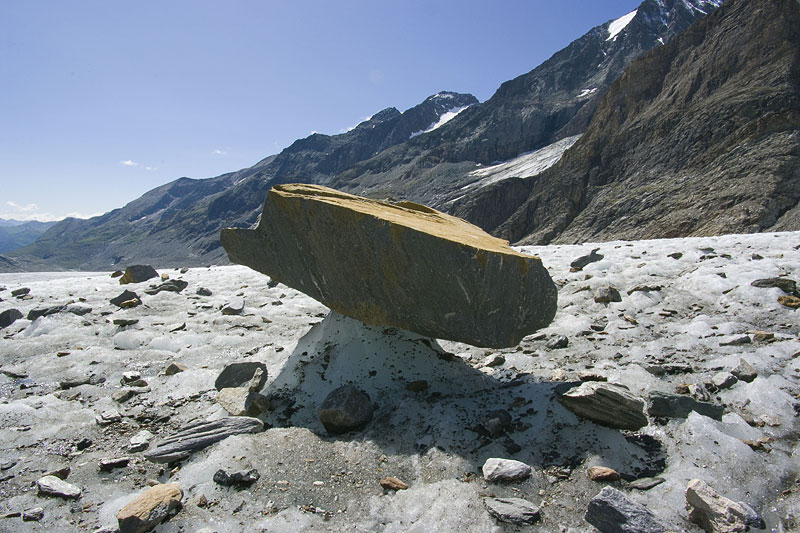 Glacier table below Glockner Kees. |
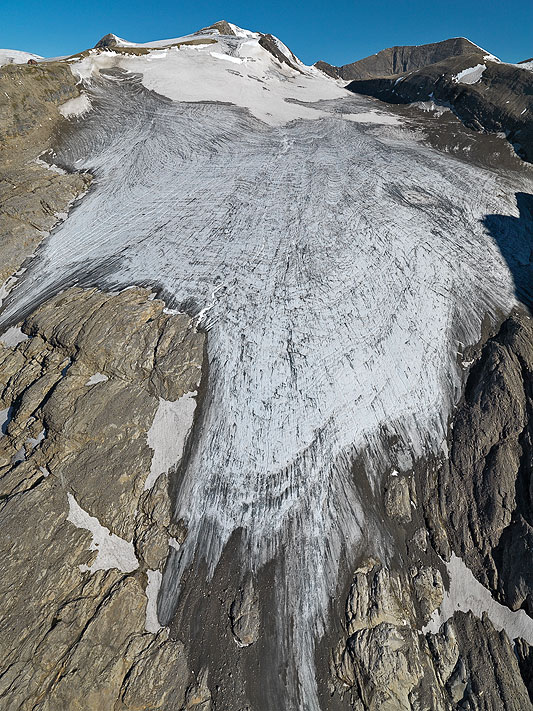 Südliches Bockkarkees, north of Pasterze. The layering in the ice is derived from
snow stratification in the accumulation zone. Aerial photo Bernhard Edmayer; 30. August 2008. | 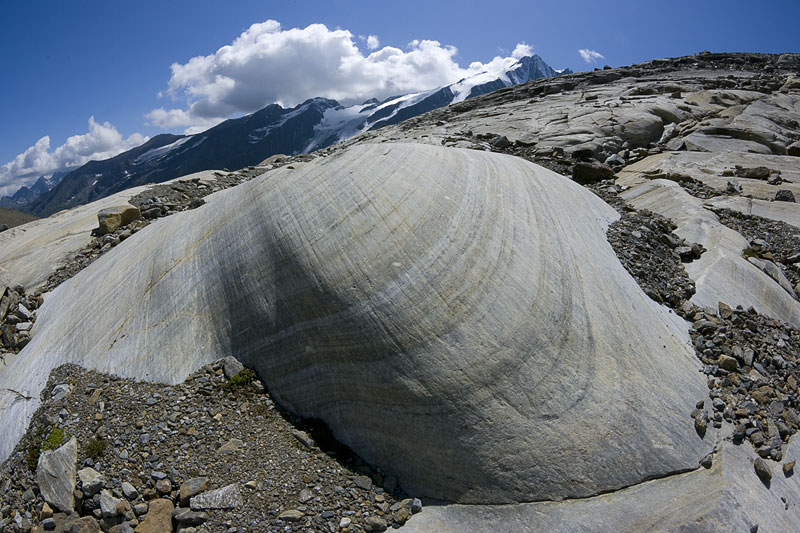 Roches moutonnées and glacial striae in front of Südliches Bockkarkees. Grossglockner (3798m) is on the far right. | 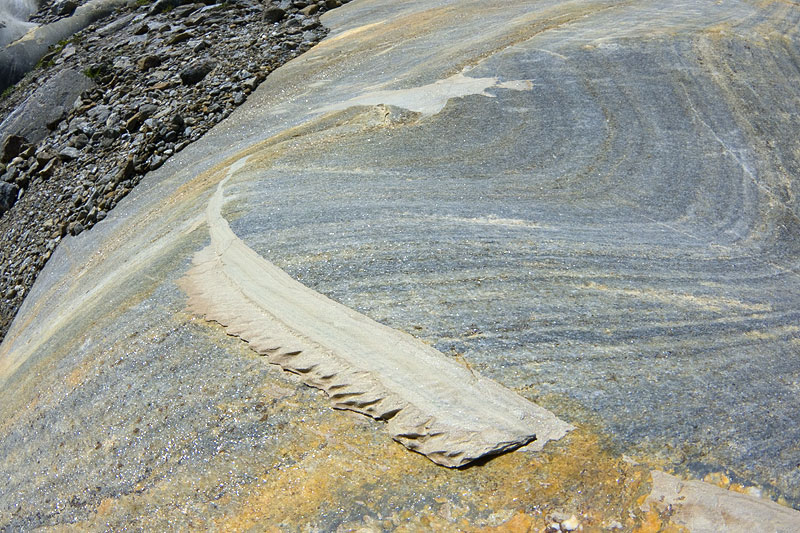 Carbonate precipitate on a polished rock outcrop in the forefield of Südliches Bockkarkees. | 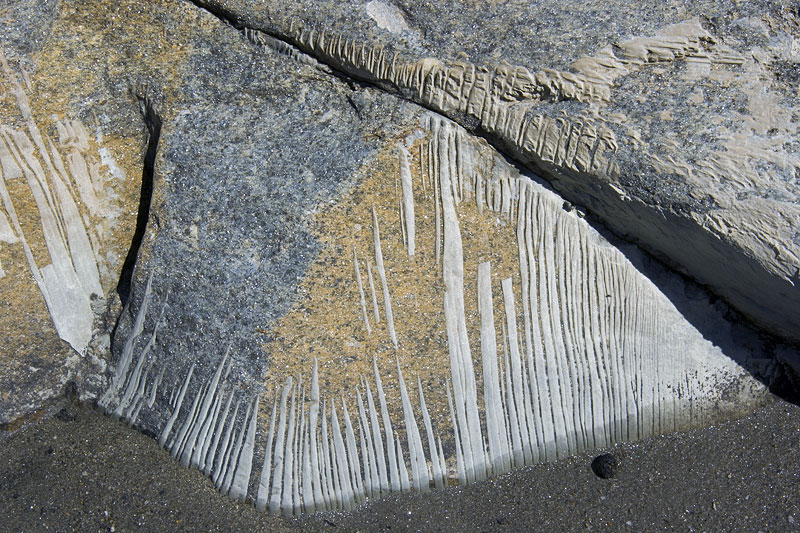 These carbonate precipitates are already getting dissolved by rainwater. |
| Unless otherwise noted all photos are by Jürg Alean. | |||