
A night on Anak Krakatau (4. - 7. June 2009)The night from 6 to 7 June 2009 was spent by the VolcanoDiscovery group at about 500m south of the active crater of Anak Krakatau, close to a big boulder. The rock served well as a shelter protecting team members against about ten bombs which impacted nearby after a flying a trajectory of many hundred metres. Other close observations of the active vent were done from the sea on the mornings of 4 and 6 June. | |||
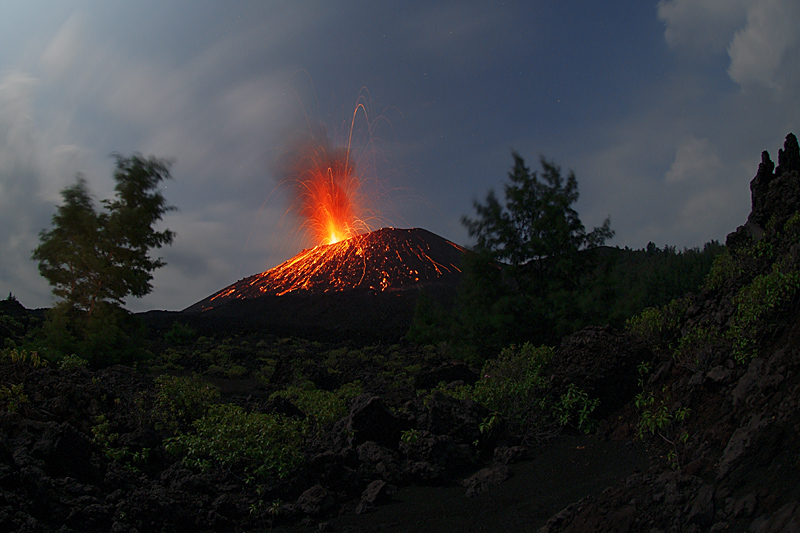 At 500m from Anak's crater, close to a big rock (at the photo's right edge) which acted as a shelter. | 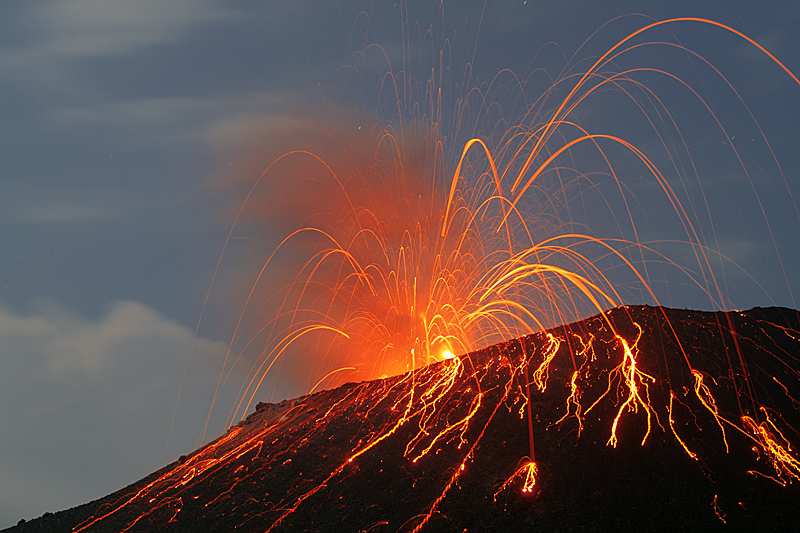 Even minor explosions produce loud bangs and eject big bombs which then roll down Anak's flank. | 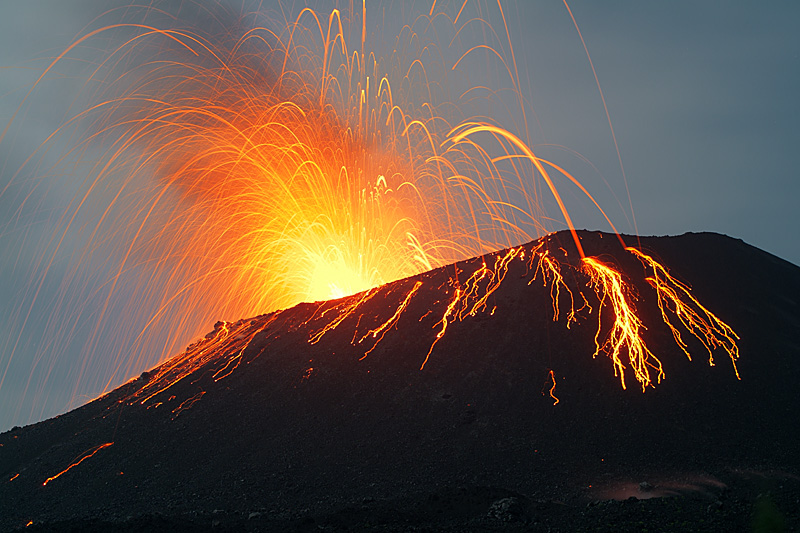 A bigger explosion erupts huge bombs towards the right, which then break into many smaller rolling pieces. | 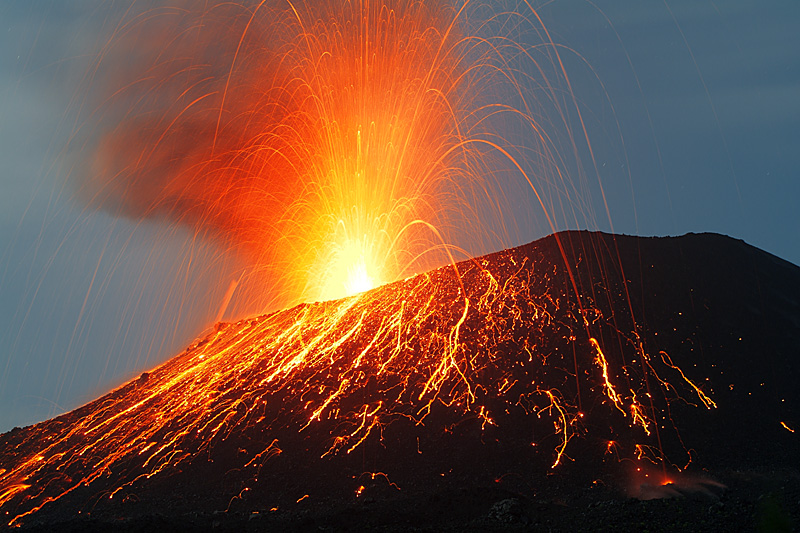 Big eruptions illuminate the entire flanks by incadescent lava. Note the bomb very close at bottom right. |
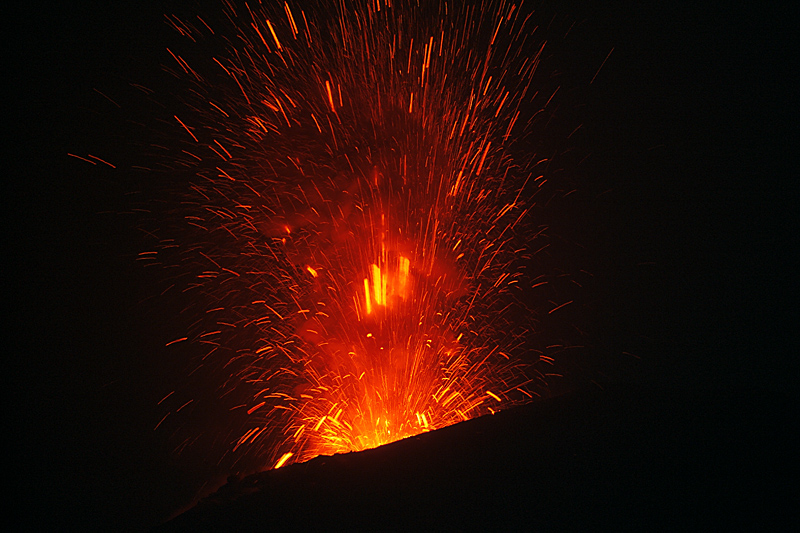 A one-second exposure at the beginning of an eruption well shows the rapid motion of flying bombs. | 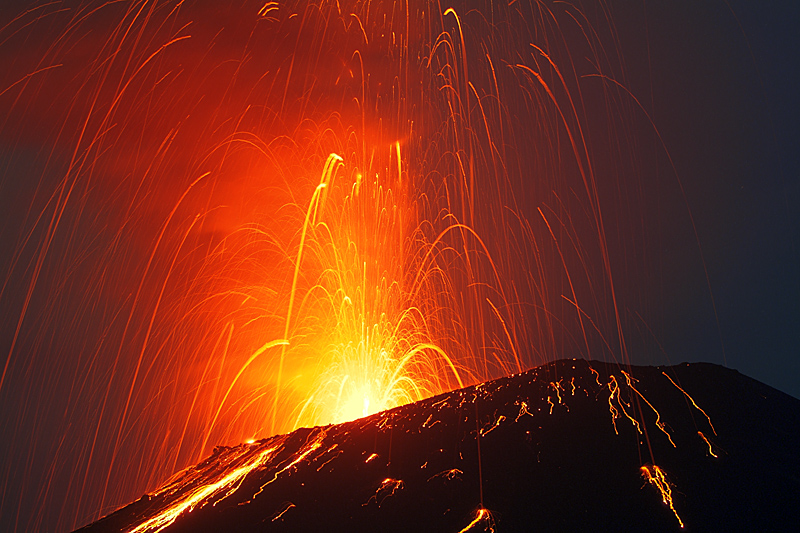 A 30-second exposure of the same eruption shows that sometimes bombs are ejected mostly in a vertical direction. | 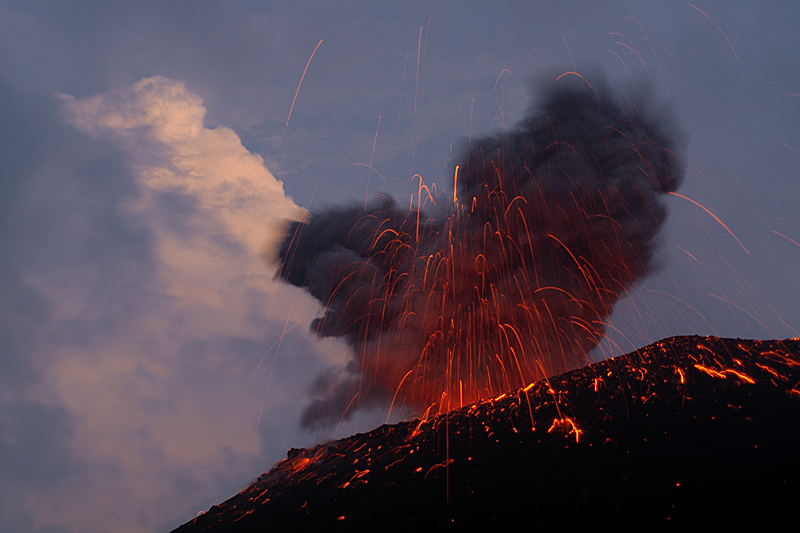 Striking contrast between a dark eruption cloud full of ash and a thunderstorm cloud in the background. | 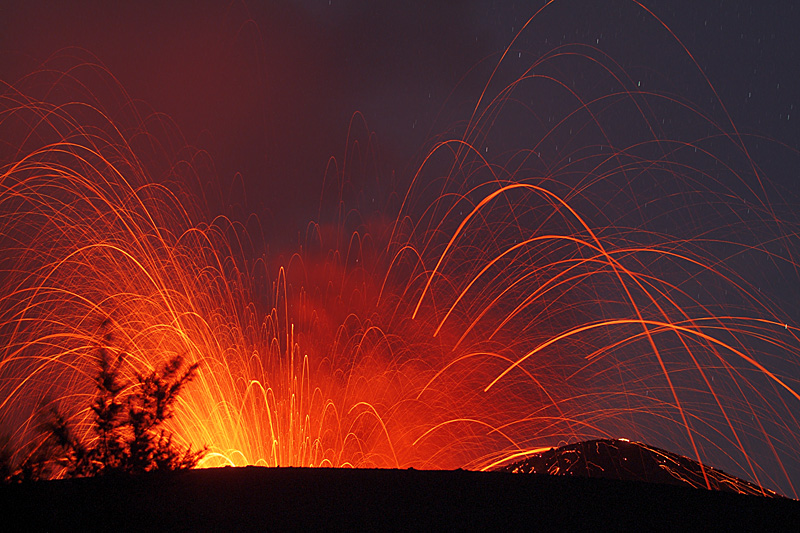 Another big eruption observed from the pine wood on the eastern side of Anak's flank (6 June). |
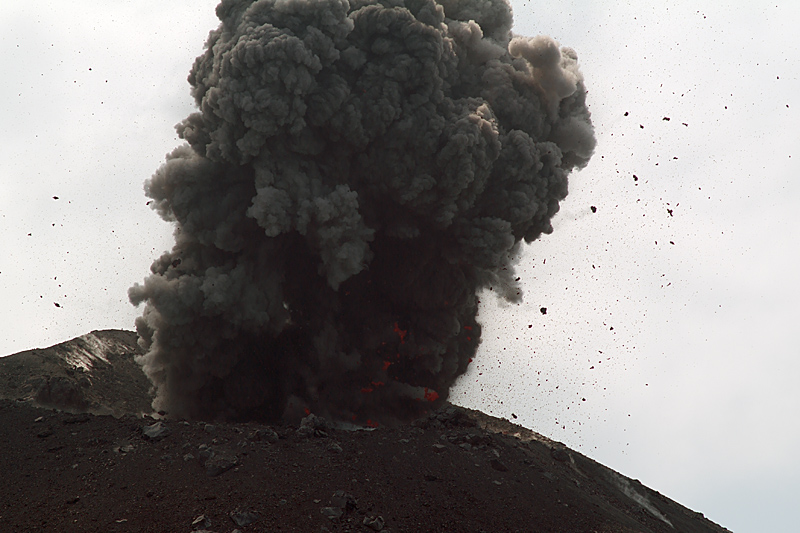 The biggest bombs are so hot that they appear red even in bright daylight (4 June). | 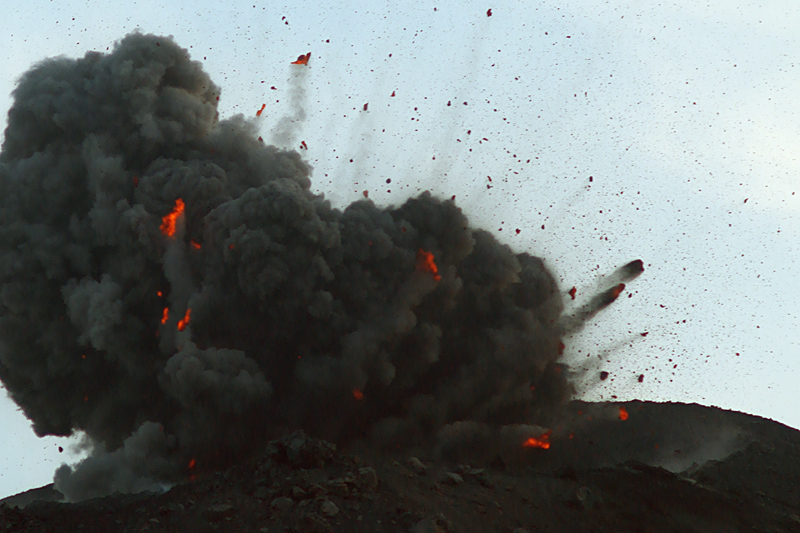 The beginning of a big explosion: note the ash trail of the biggest bombs at right (6 June). | 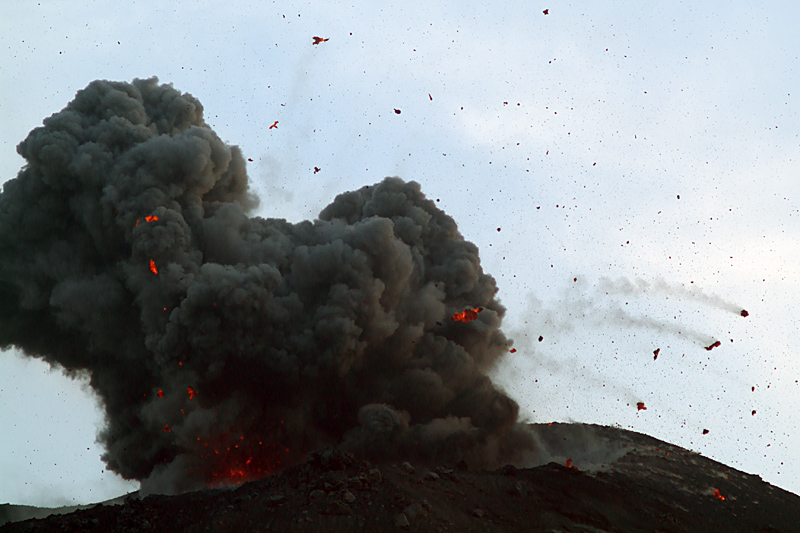 This photo was taken few seconds after the previous one, with some bombs landing on the crater rim. | 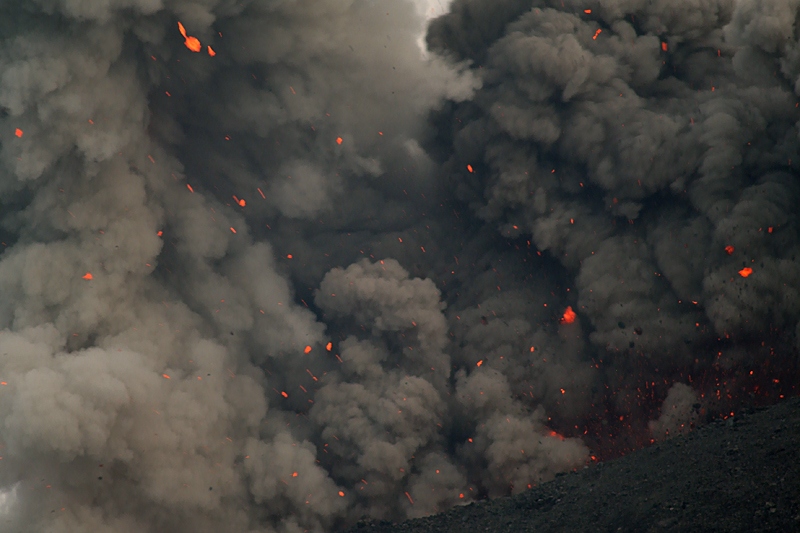 Extreme zoom inside the eruption ash cloud reveals that not only red, incadescent, but also many dark (dangerous!) blocks are ejected. |
| Photos by Marco Fulle taken with 10-20mm, 50mm, 135mm and 300mm lenses (reflex digicam with 16x24mm sensor). | |||