
Crevasse filming and ice cave 2010On 31. May and 1. June the tongue of Morteratsch was visited during a filming campaing (documentry by BBC). Ablation during the previous summer had destroyed most of the ice caves found during the winter 2008/09. However, small parts still remained and were easily accessed, thus posing a potential danger to tourists who occasionally enter them, or walk over their roofs, and are unaware of the possibility of roof collapse. | |||
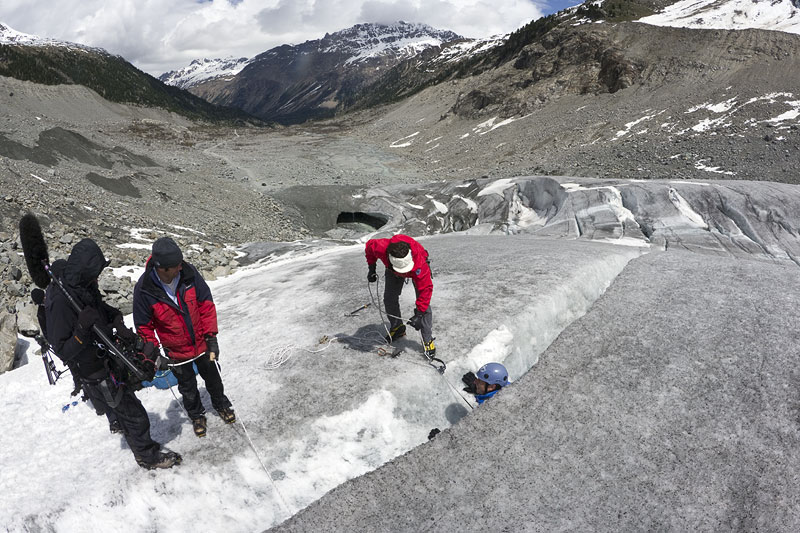 A presenter and cameraman are lowered into a crevasse for filming. Looking downvalley over the rapidly receding glacier tongue. | 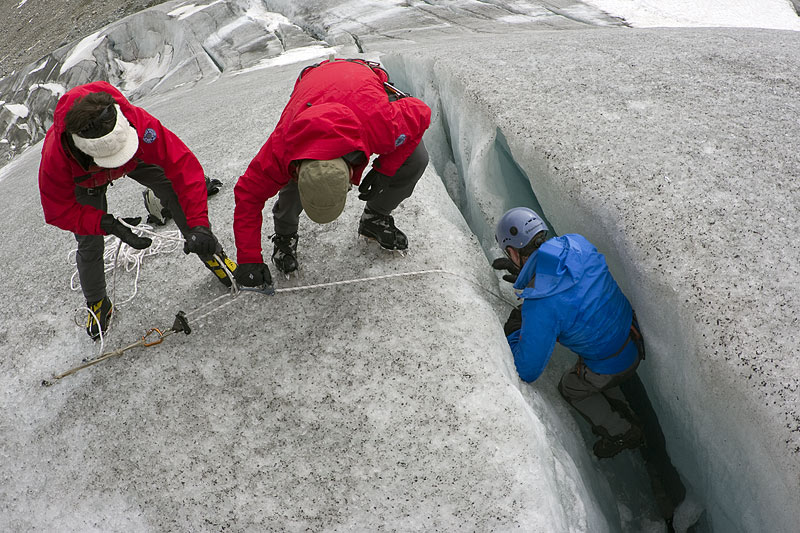 Descending into the crevasse, using a pulley system and crampons. The whole climbing excercise is supervised by two Alpine guides. | 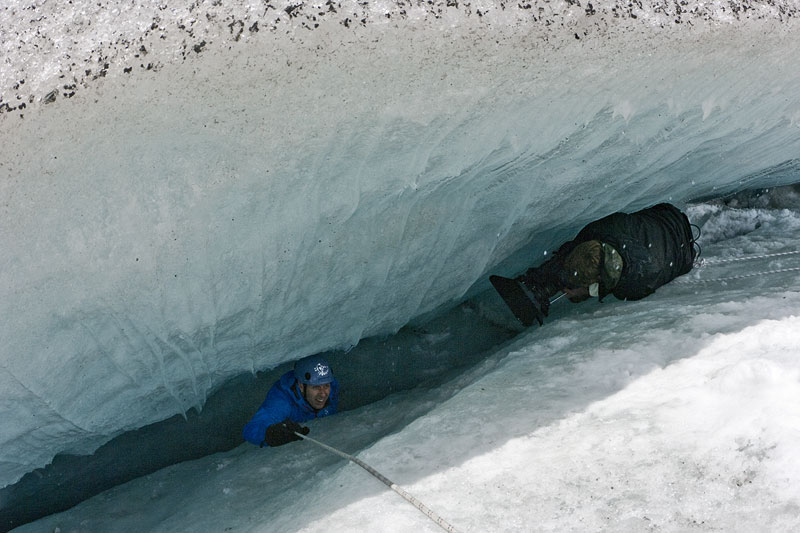 The presenter has reached the bottom of the crevasse. Tight space and meltwater are the main problems the cameraman has to deal with. | 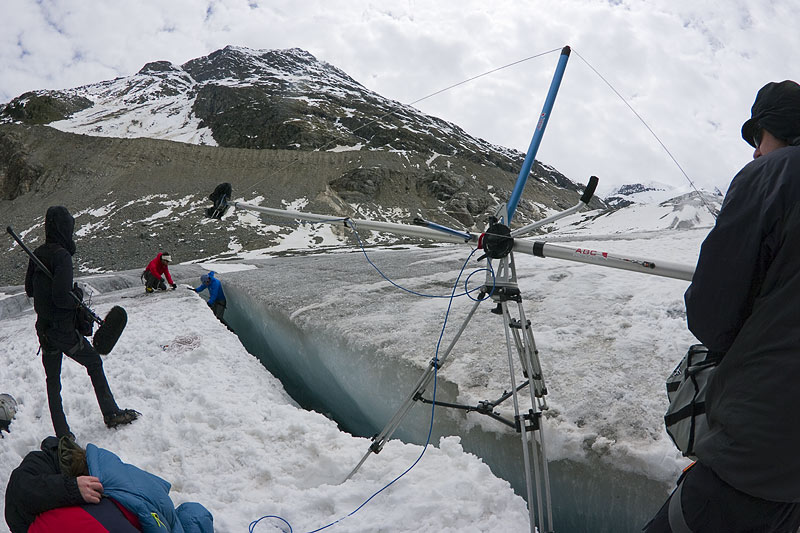 Some of the takes within the crevasse involved using a crane which allows the camera to move and reach otherwise inaccessible positions. |
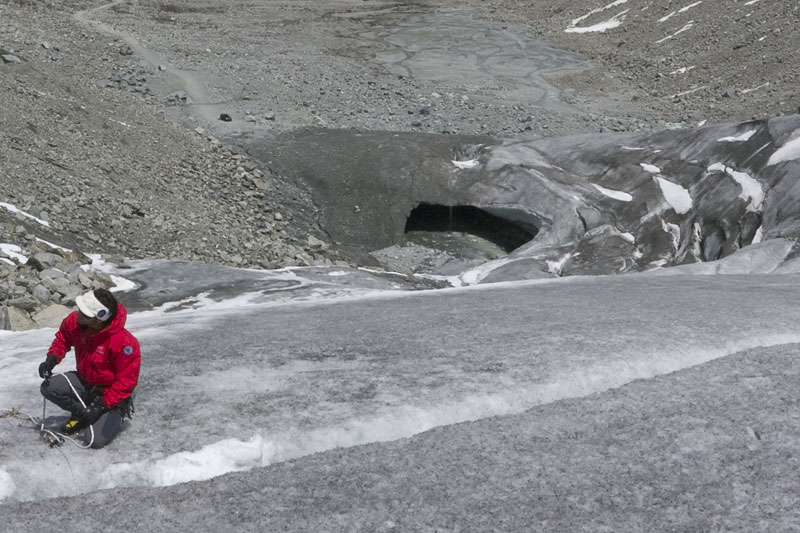 Looking towards the tongue and the largest remnant of the ice caves. Early in the melt season some snowpatches remain even at the terminus. | 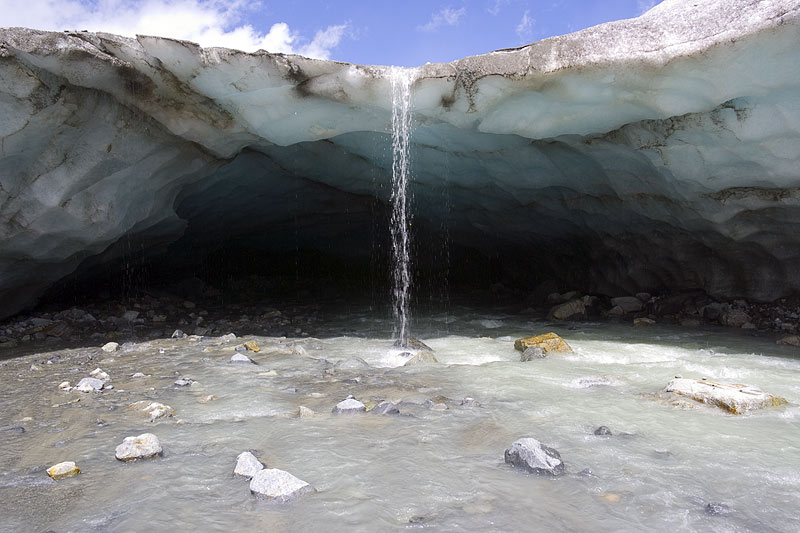 Entrance into the ice cave; it is facing upglacier, thus the stream flows from the photographer towards and into the cave. | 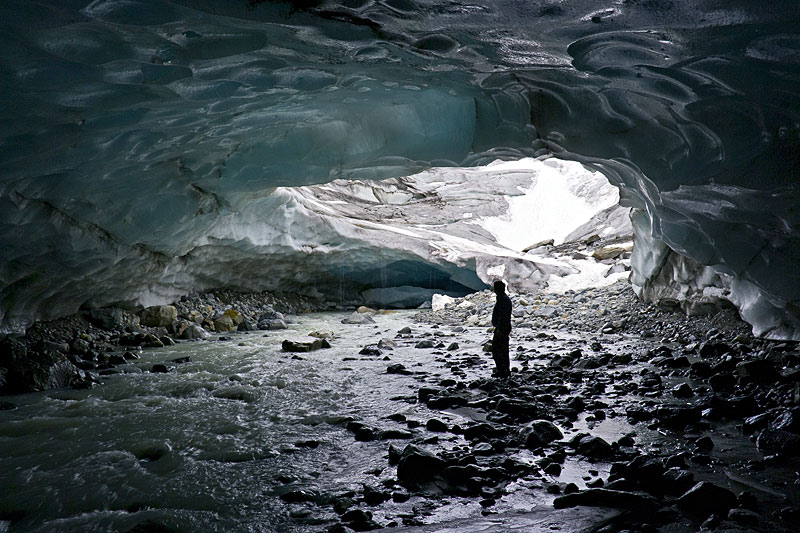 Inside the ice cave during overcast weather. The ice forming the roof is thin, and roof collapse is a potential hazard. | 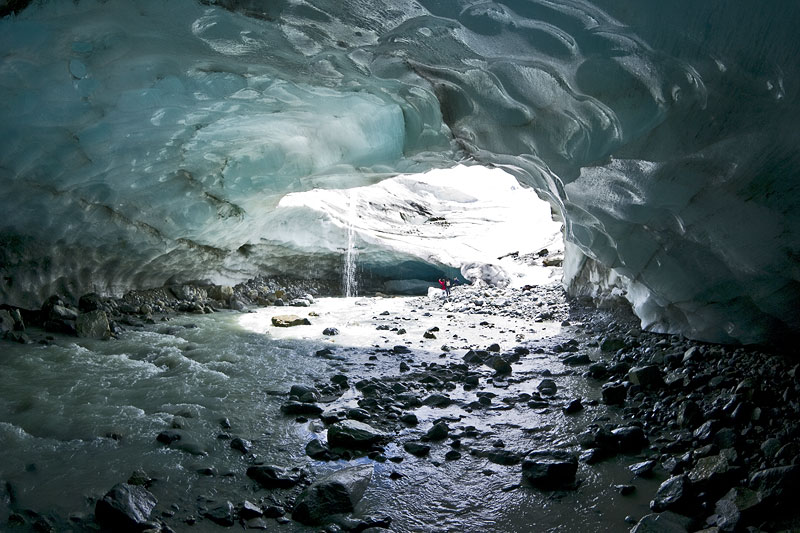 Within the ice cave during sunny weather: The waterfall from the roof is stronger due to increased ablation (compare previous photo). |
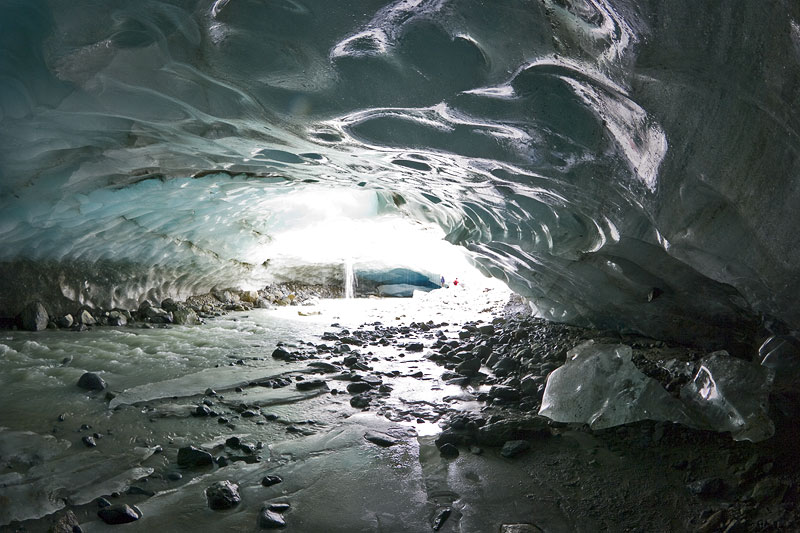 Deeper in the ice cave; note foliation structures in the ice on the right. | 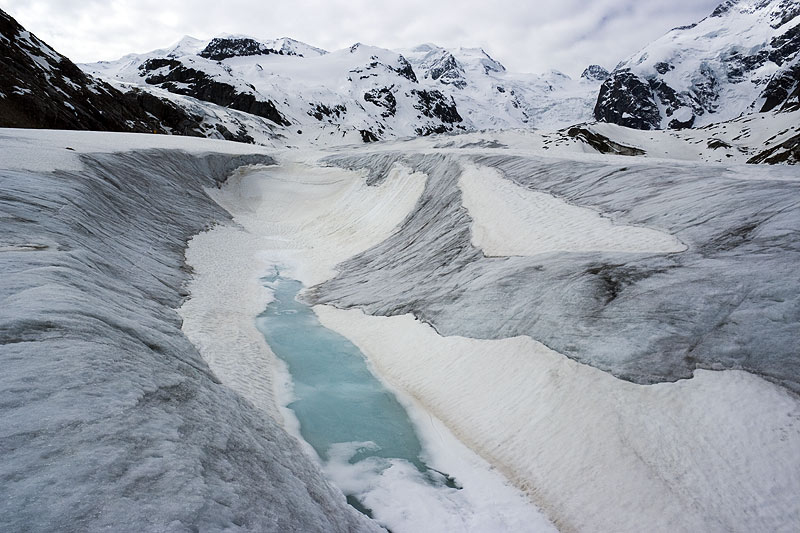 Melting snow within a crevasse a few hundred meters upglacier from the terminus. | 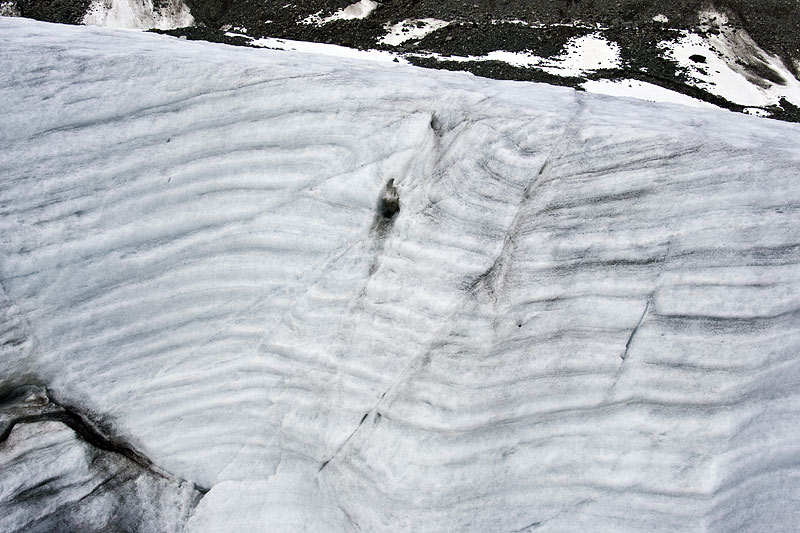 Foliation showing thrusting, faulting and folding on a crevasse wall. | 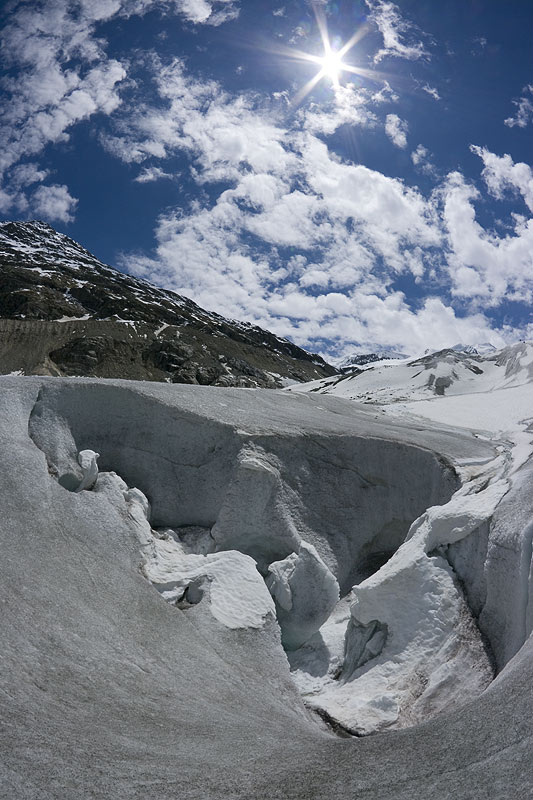 Springtime on Vadret da Morteratsch (partially snow-filled moulin in the foreground). |
| Photos Jürg Alean | |||