
Ecological succession in the forefield of Vadret da MorteratschComparing photos from 1985, 2002, 2015 and 2021 documents the ecological succession of plants in terrain that has become ice-free during the last few decades. | |||
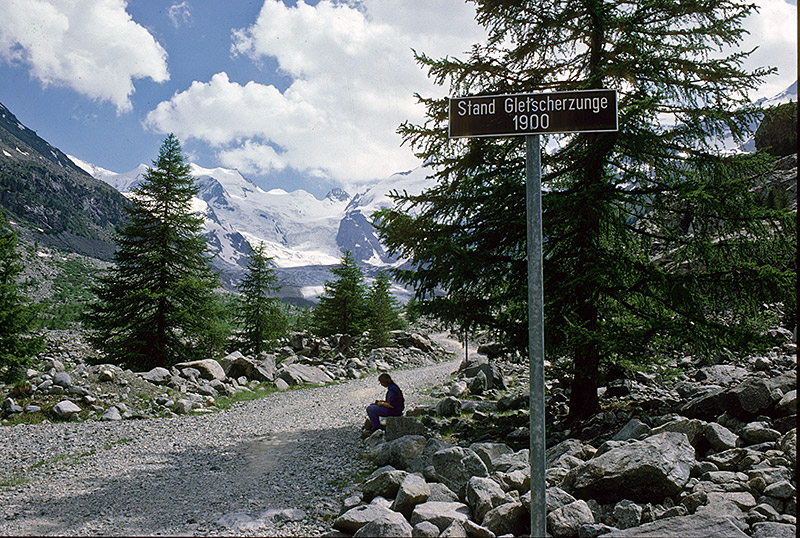 Glacier front in 1900, photo 1985 Since 1900 a larch forest has developed. | 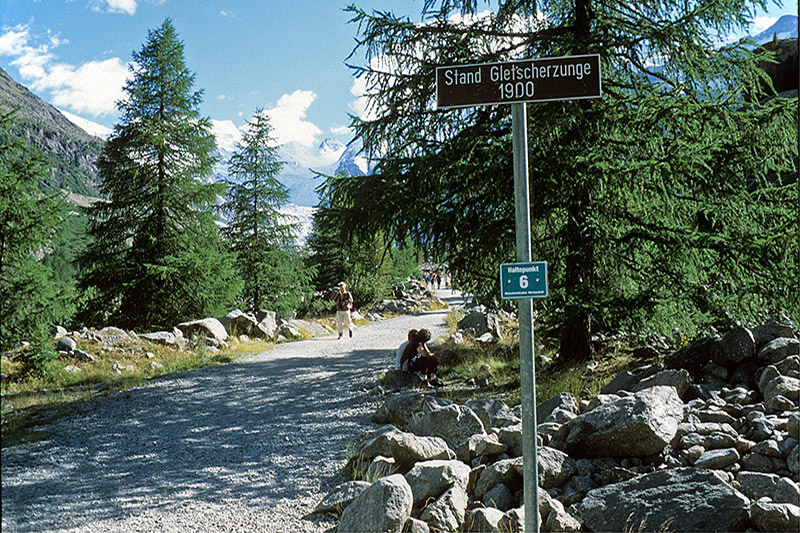 Glacier front in 1900, photo 2002 The larches (Larix decidua) have grown in height as well as in width. | 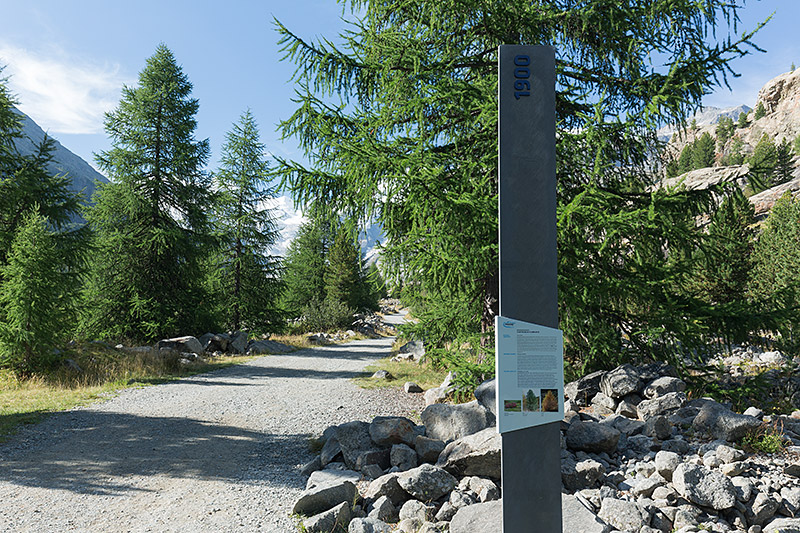 Glacier front in 1900, photo 2015 The markers along the path have changed over the years as well... | 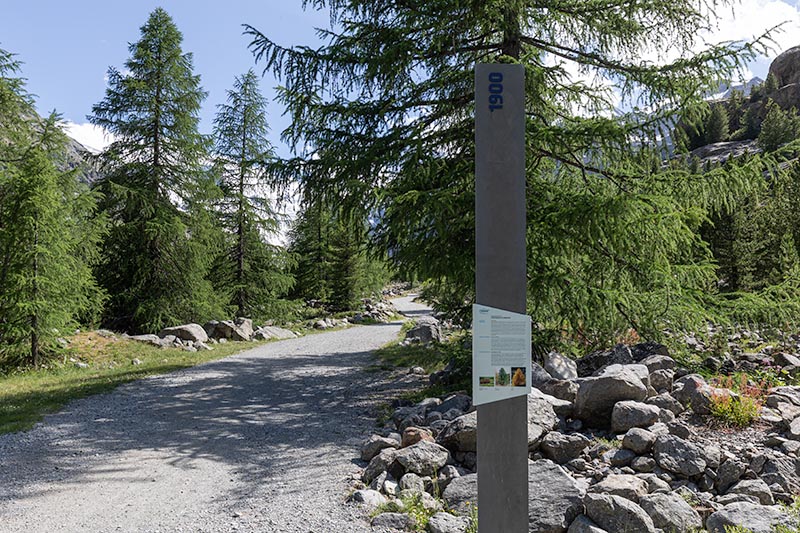 Glacier front in 1900, photo 2021 A real forest is growing. |
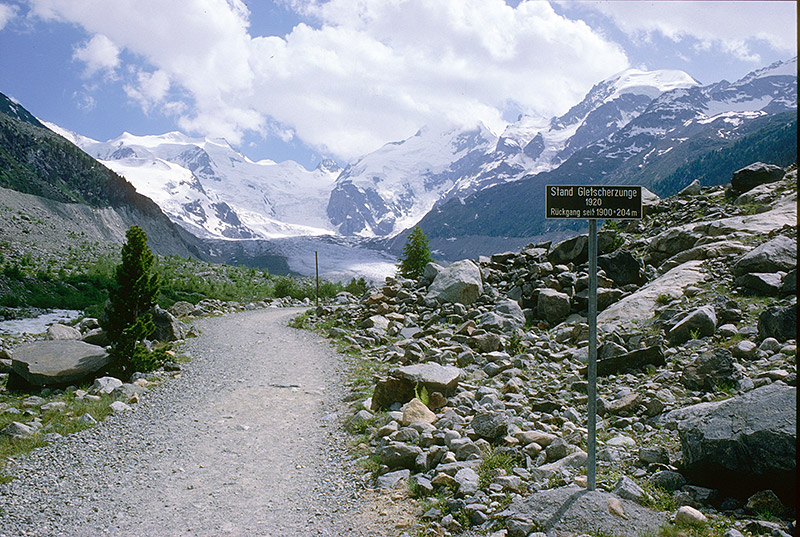 Glacier front in 1920, photo 1985 Swiss stone pines (Pinus cembra, dark green) usually colonize terrain long after larches. | 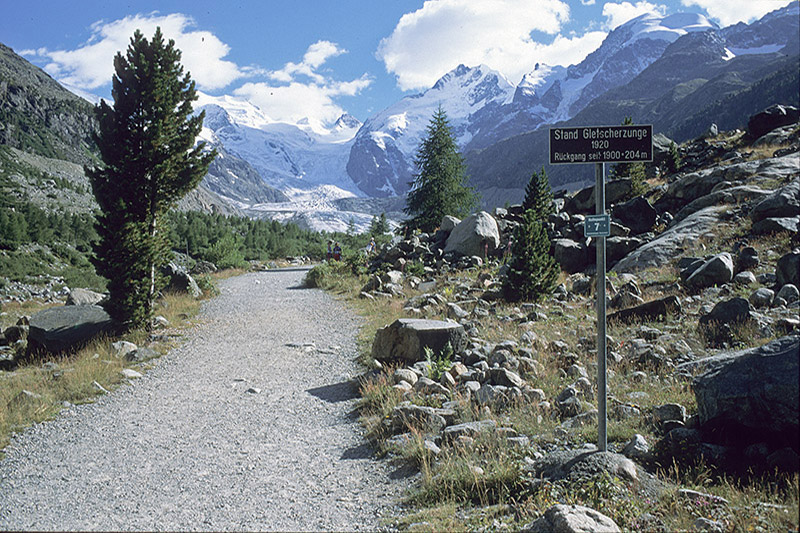 Glacier front in 1920, photo 2002 Patches of Alpine grassland develops between the pines and larches. | 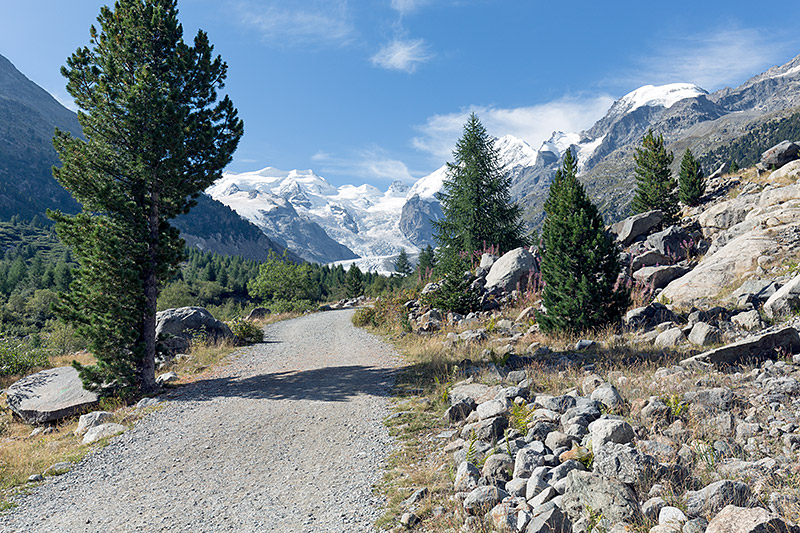 Glacier front in 1920, photo 2015 After several decades more, a fully grown pine forest will have established itself here. | 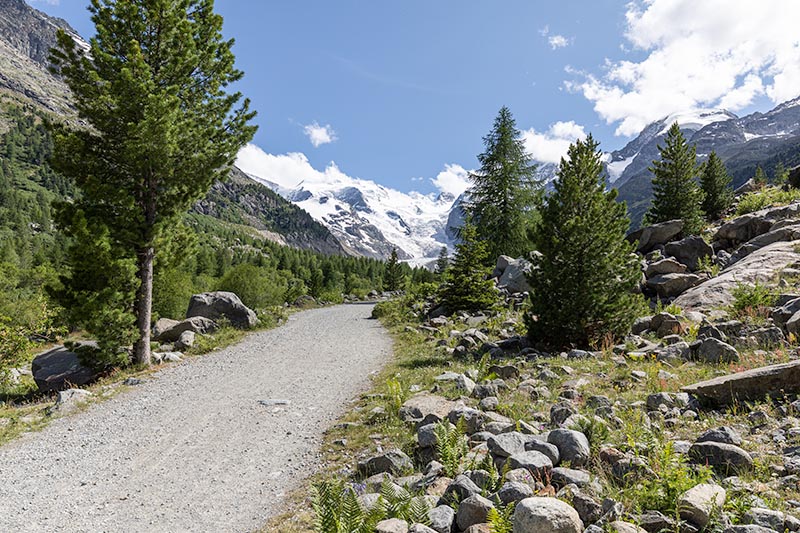 Glacier front in 1920, photo 2021 The growth of the vegetation continues. |
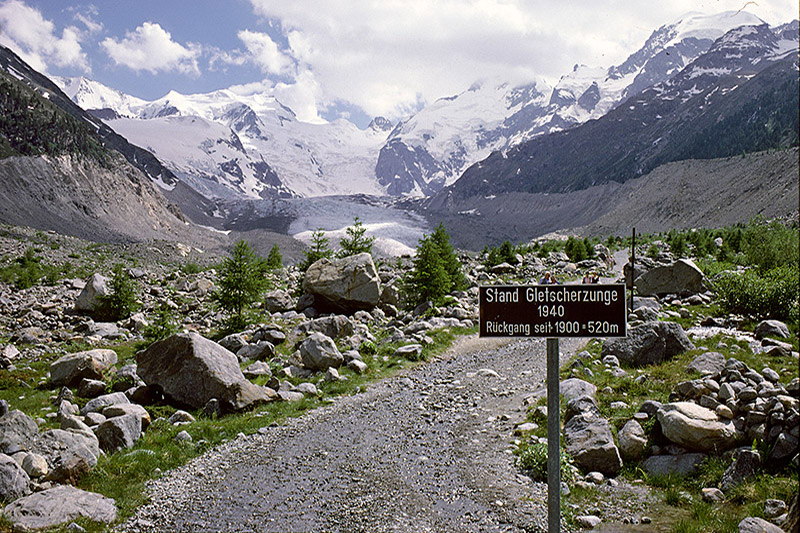 Glacier front in 1940, photo 1985 Since 1940 larches taller than a person have grown here. | 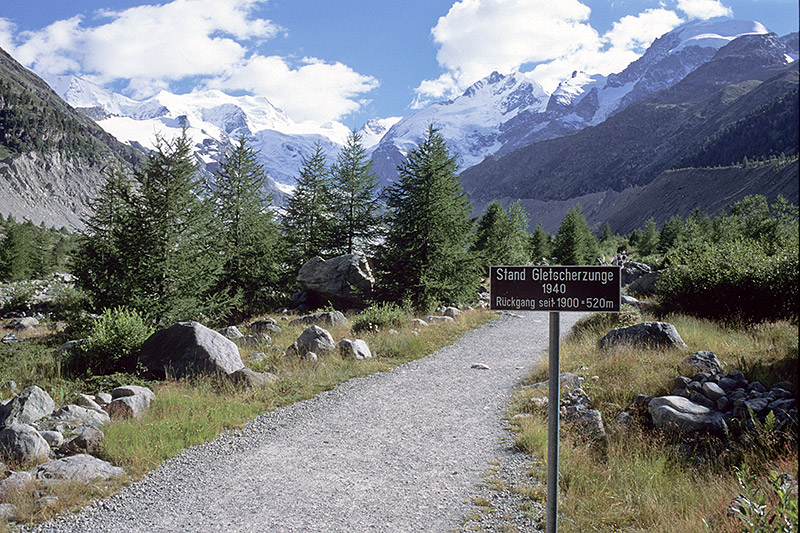 Glacier front in 1940, photo 2002 Meanwhile the larches block the view to glacier tongue at this location. | 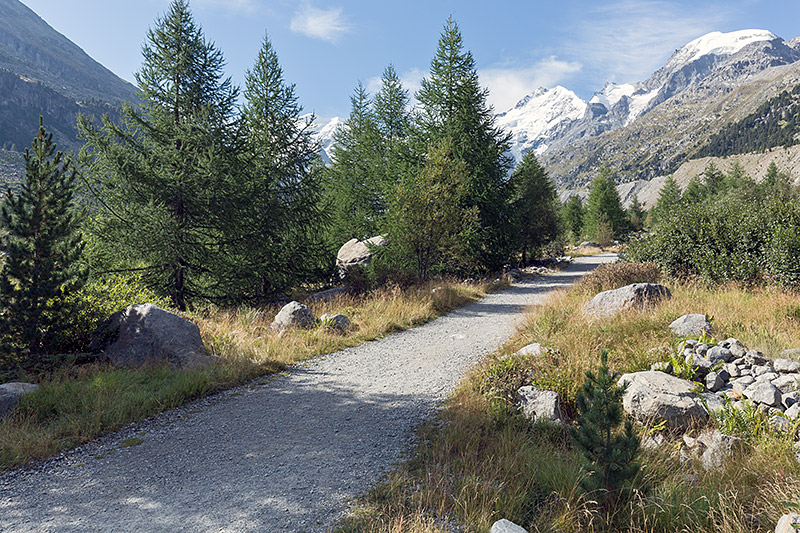 Glacier front in 1940, photo 2015 Larches are followed by Swiss stone pines after several decades. | 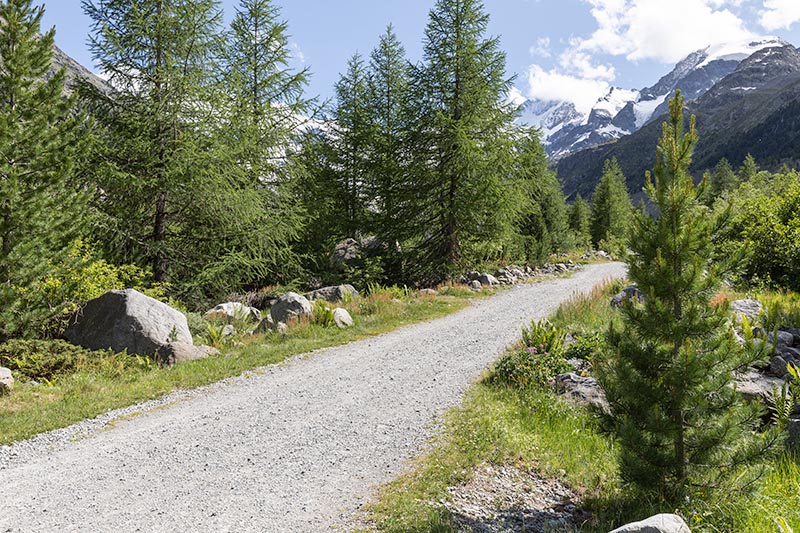 Glacier front in 1940, photo 2021 Note how tall the stone pine in the right foreground has become. |
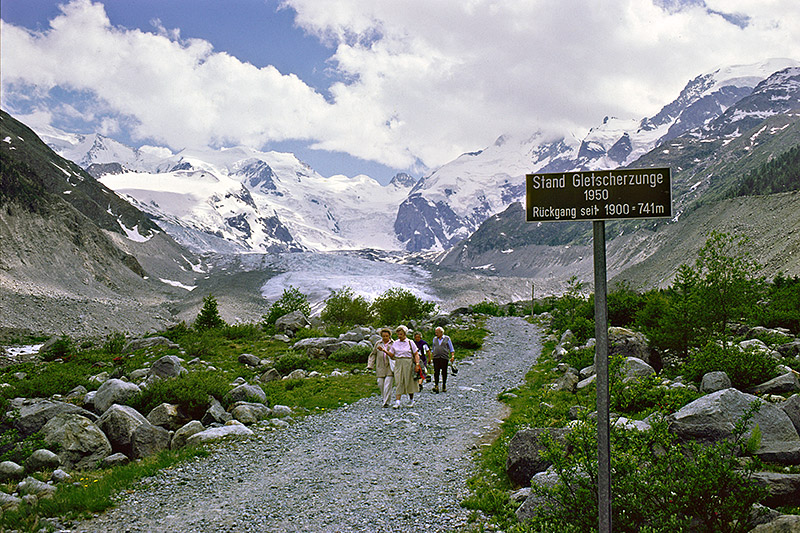 Glacier front in 1950, photo 1985 Between willows and alder bushes the first small larches appear. | 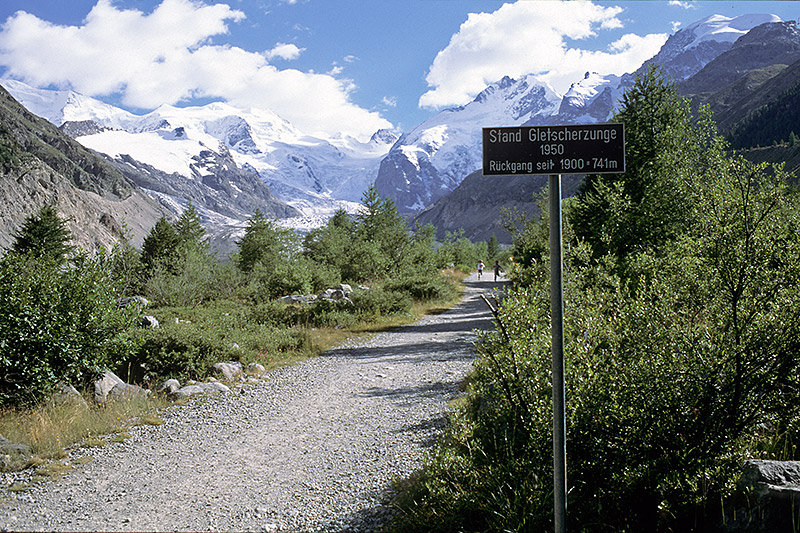 Glacier front in 1950, photo 2002 Some larches are now already much taller than the willows. | 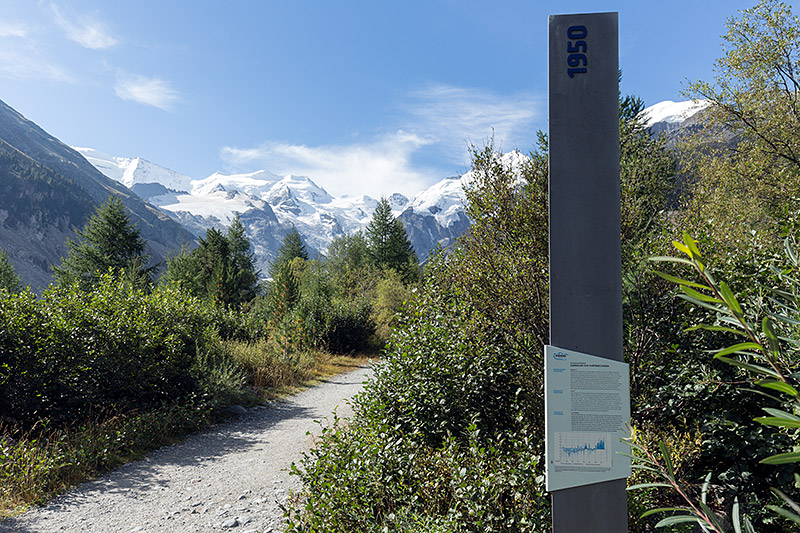 Glacier front in 1950, photo 2015 The glacier tongue is now hidden by the lush vegetation. | 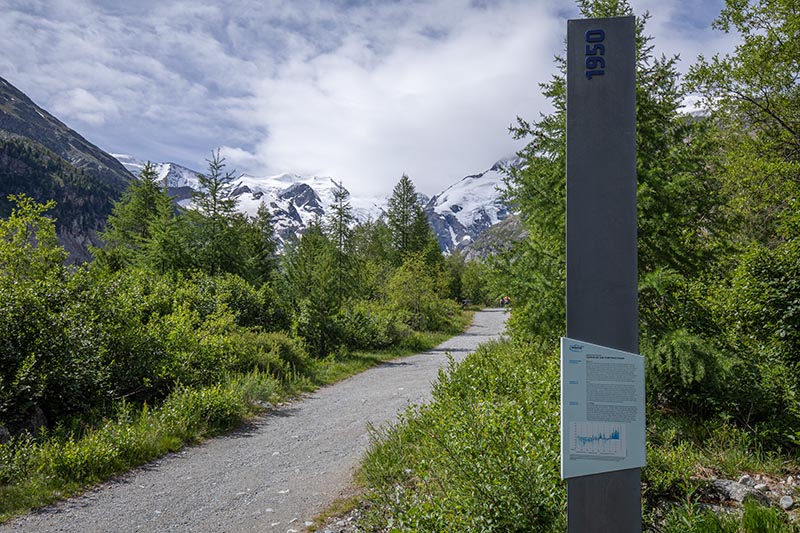 Glacier front in 1950, photo 2021 The larches now mostly hide the mountain peaks. |
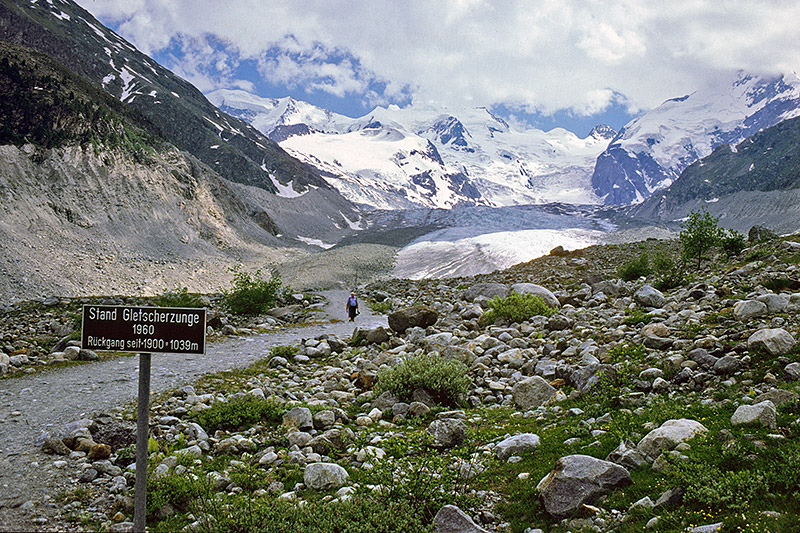 Glacier front in 1960, photo 1985 Since 1960 hardly any confiers have grown. | 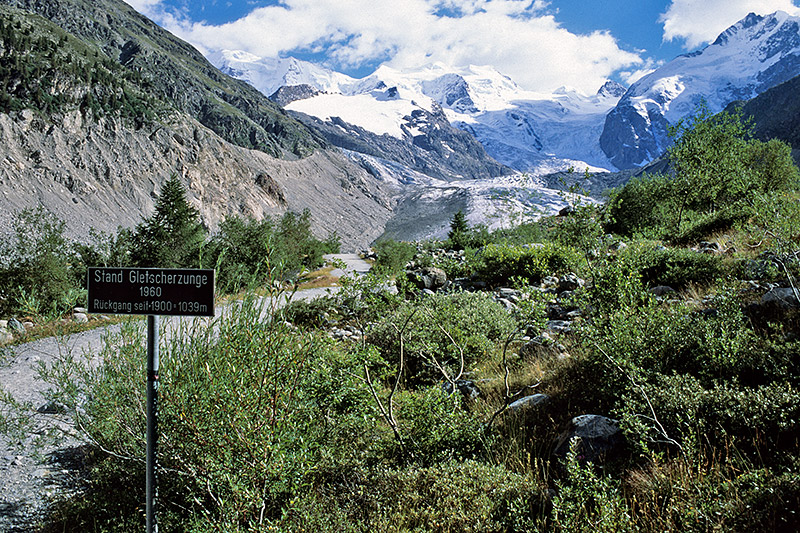 Glacier front in 1960, photo 2002 Between willos and alder the first larches appear. | 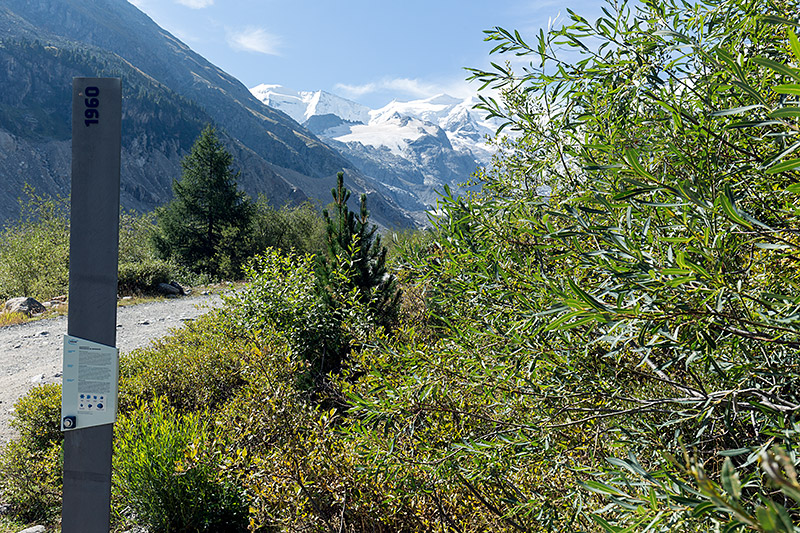 Glacier front in 1960, photo 2015 Proliferating willows and alder make access to the photo location more and more difficult. | 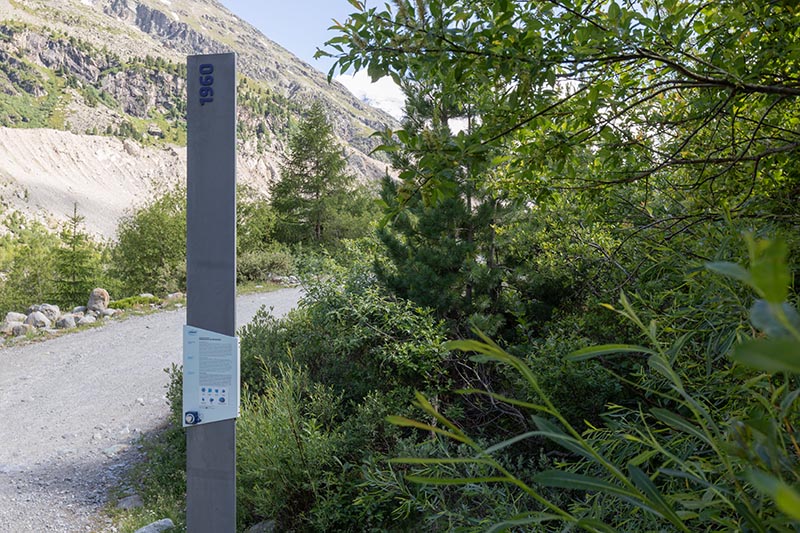 Glacier front in 1960, photo 2021 Soon this location will no longer be accessible... |
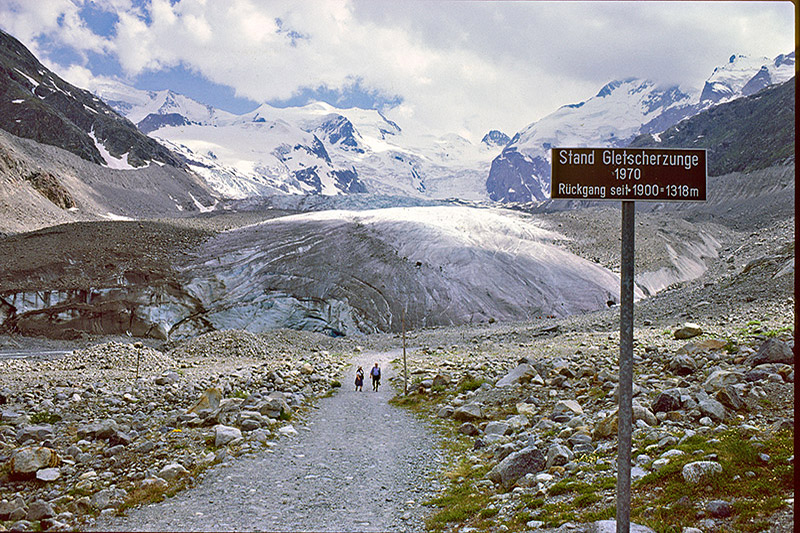 Glacier front in 1970, photo 1985 Within 15 years patches of Alpine plants have established themselves. | 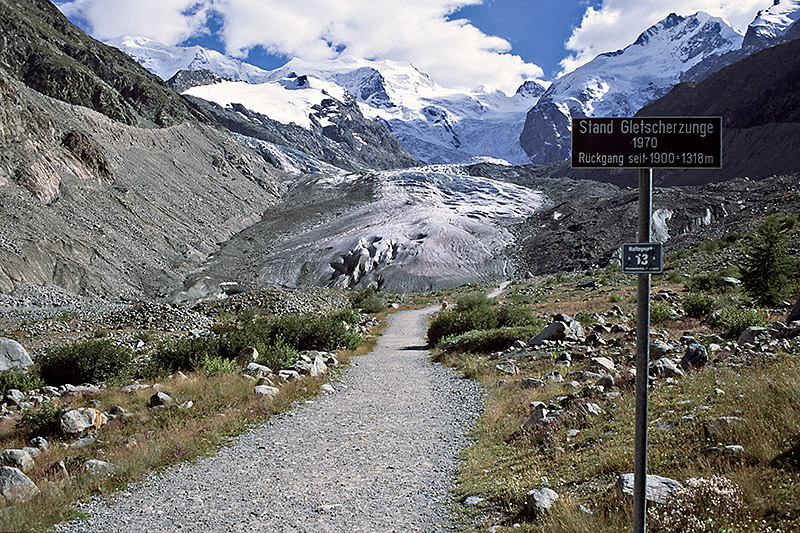 Glacier front in 1970, photo 2002 Ground cover by vegetation increases. Willows, alder and larches colonize the ground as well. | 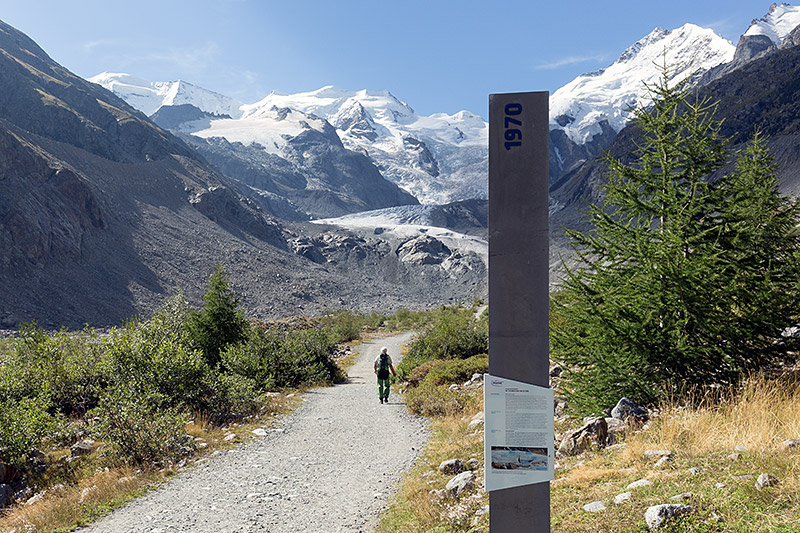 Glacier front in 1970, photo 2015 While the larches grow in hight, glacier recession accelerates. | 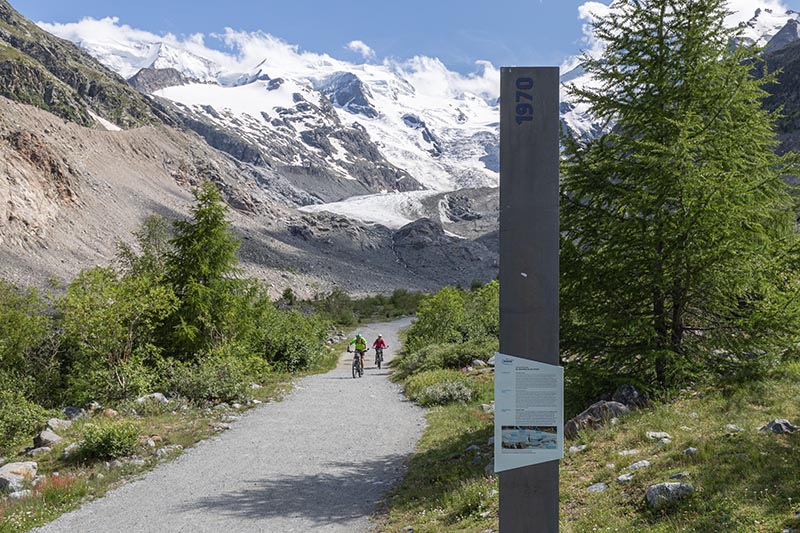 Glacier front in 1970, photo 2021 The glacier tongue has almost disappeared. |
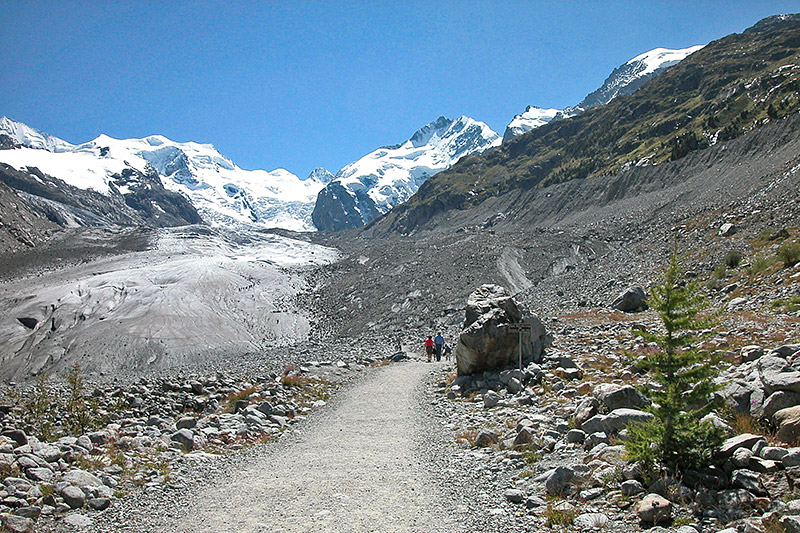 Glacier front in 1980, photo 2002 This location was still ice-covered in 1970. | 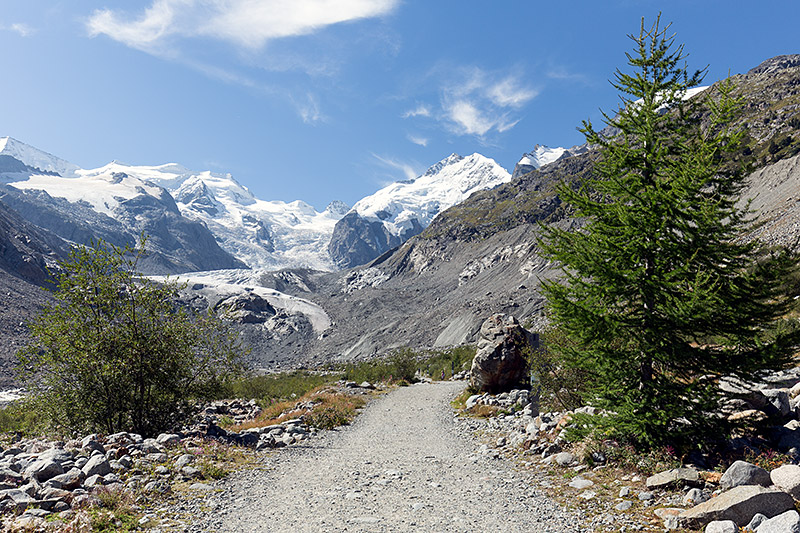 Glacier front in 1980, photo 2015 The larch on the right side of the path grows quite quickly. | 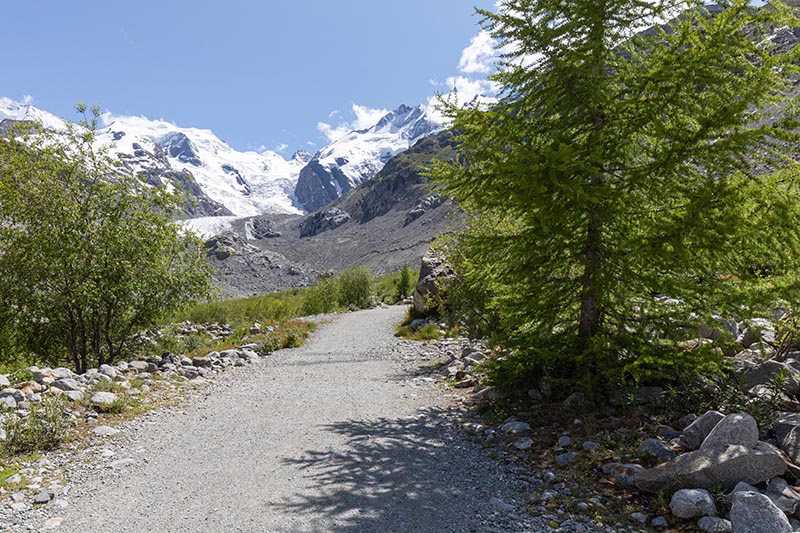 Glacier front in 1980, photo 2021 Soon the bushes on the left will hide the glacier tongue even at this location. | 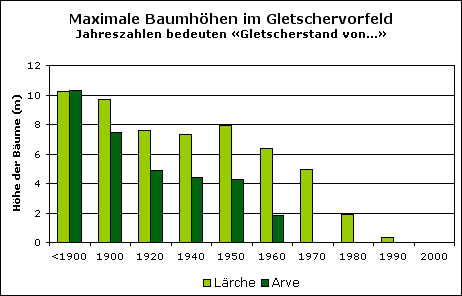 In 2002 the avarage height of some of the tallest larches and Swiss stone pines was estimated. Swiss stone pines take about 40 years to colonize the land, whereas the first larches appear after only 10 years or so. |
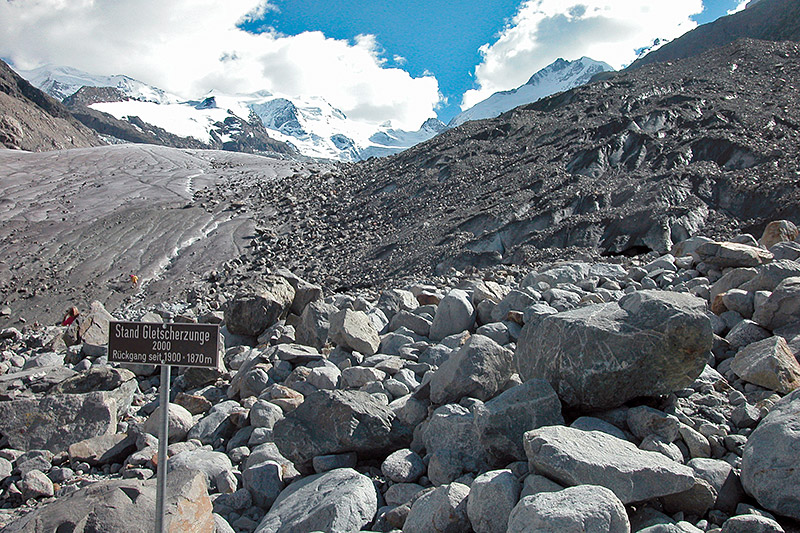 Glacier front in 2000, photo 2002 On this ground, ice-free only since two years, hardly any pioneer plants are visible. | 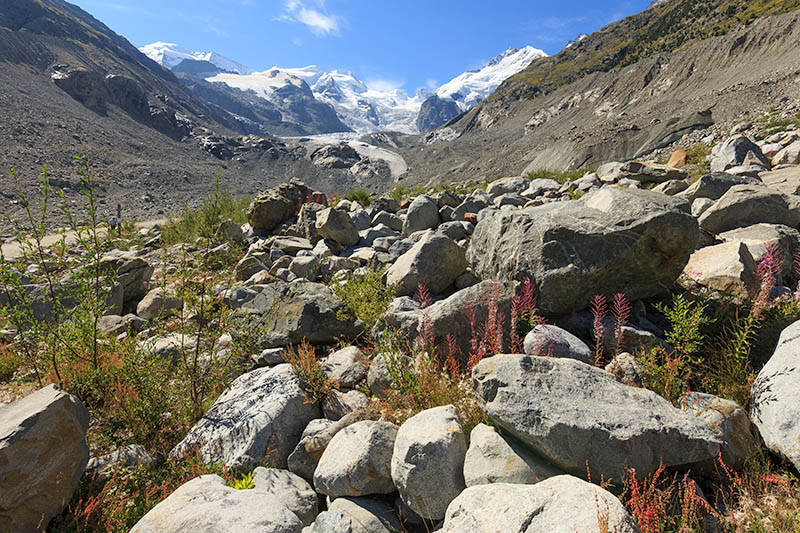 Glacier front in 2000, photo 2015 Meanwhile some willows and various flowring plants have started to grow. | 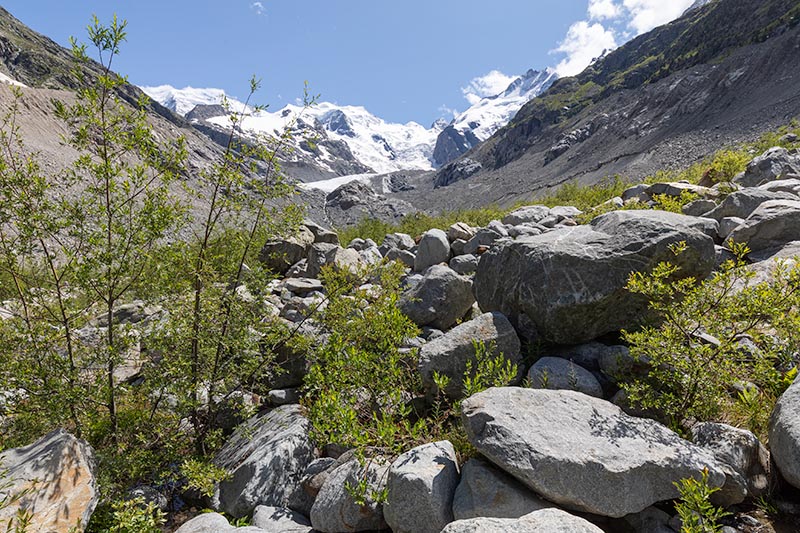 Glacier front in 2000, photo 2021 The willows rapidly grow taller. | 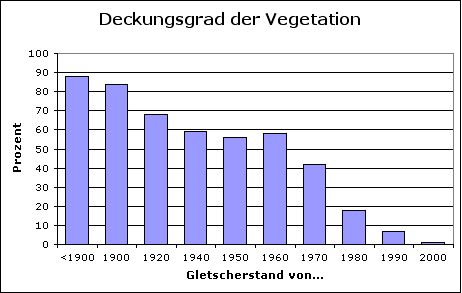 In 2002 the percentage of ground covered by vegetation was estimated. Aereas with large boulders (>0.4m) were not considered. Within one century, about 85% are reached. Even outside the moraines from the Little Ice Age (before 1850) it is not much higher. |
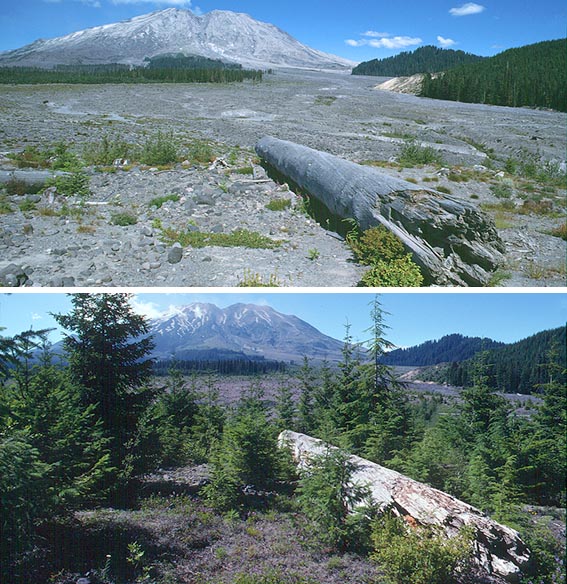 Morteratsch and Mount St. Helens The idea to document vegetation changes in front of Vadret da Morteratsch was born, not near a glacier, but at Mount St. Helens volcano. Its eruption in 1980 destroyed large areas of forest. In 1988 J. Alean documented the starting re-colonization of the terrain by plants, and in 2001 the photos were repeated. The material is on STROMBOLI ON-LINE in the section on Mt. St. Helens in the chapter «Life returns». The treeline is considerably lower at Mount St. Helens (1500m.a.s.l. vs. 2200m at Vadret da Morteratsch). See also the virtual climb of Mount St. Helens. | |||